Pages

Friday, March 25, 2011

The Angel of the Lord Announced Unto Mary . . .

A sermon on Romans 2:25-3:18, Jeremiah 5:1-9 and John 5:30-47 March 25, 2011,
Feast of the Annunciation. Preached at the Trinity Chapel.

Today we are exactly 9 months away from Christmas. it’s the feast of the annunciation, when “the Angel announced unto Mary and she conceived by the Holy Ghost.” It seems ironic that the Angel’s announcement of the one “who will save his people from their sins” should come in the middle of Lent, and that this feast should be marked by readings that speak of God’s judgment. Especially incongruous is the reading from Romans where Paul specifically speaks of God’s judgment against Israel, the same people Jesus came to save.
This reading is a key part of Paul’s argument in Romans. In the first chapter he established that God’s wrath and judgment rest on all the gentiles. This wouldn’t have surprised any Jewish readers: Gentiles were, by definition, idolaters, outside God’s covenant and the sphere of his grace. A pious Jewish reader might have come to the end of C. 1 and been excused a sigh of relief, and a prayer of thanks for the good fortune to have been born into the covenant people.
The Apostle doesn’t let his audience enjoy that relief for long though. The Jewish people, the covenant people, also stand condemned before God. “Circumcision,” Paul says “is indeed of value if you obey the Law, but if you break the Law, your circumcision becomes uncircumscision” (ESV, 3:25). Now Paul’s claim that the Jews had failed to keep the Law must have sounded strange. Paul himself says in Philippians that he was blameless at to righteousness under the Law (Phil. 3:6). And I don’t doubt that there were many Jewish men and women who could have said the same. They had kept the Law; They had sinned, fair enough, but the Law made provision for forgiveness through sacrifice. So for what fault could God possibly condemn them?
What Paul saw when his attempt to stamp out Jesus’ followers was interrupted by conversion, was that even though he was blameless with respect to the Law, he had completely missed the point of the Law. The Law is, as Paul said, “the embodiment of knowledge and truth” (2:20), and the Truth which the Law spoke of was the Truth of Jesus Christ. Jesus himself says “if you believed Moses, you would believe me; for he wrote of me” (John 5:46 ESV).
It’s not so ironic after all that we read this on the feast of the Annunciation, because the judgment against God’s people was precisely what the Angel announced to Mary. God had come to dwell with us, to save his people from their sins - this was the truth to which the Law bore witness. The world rejected this truth. St. John says “this is the judgment: the Light has come into the world, and people loved darkness rather than the Light” (John 3:19). It is the Gospel, as much as the Law, which judges us.
The Prophet Jeremiah searched among the wealthy and the wise, looking for a righteous man, and was disappointed. Israel had the spiritual wealth and wisdom of the Law, they were “entrusted with the oracles of God,” but they became no better than the Gentiles when they rejected the only one who perfectly embodied the Law God had given them. That’s why Paul can say that the Jews had every advantage (3:1-2), and yet were no better off for it (3:9). All of humanity, Gentile or Jew, is under God’s righteous judgment.
Now at this point I picture Paul’s hypothetical Jewish reader throwing up his hands in frustration and saying “Well what are we supposed to do then? We did all the right things! But we’re guilty anyway, judged anyway. What more can we possibly do?” But that’s exactly it: we can’t do anything!
Our whole problem is that we try so hard to do something; we want to establish our own righteousness apart from God. We’ve been doing it since the Garden of Eden, when we wanted to be like God, when we tried to deny our dependence on him. And anything we do, whether circumcision, or Baptism, or even the Holy Eucharist, just becomes a more subtle form of idolatry when we attempt to use it as a way to prove our righteousness, rather than a sign of our total dependence on God.
So again, what can we do? In Christ we have heard God’s judgment that “None is righteous.” And the only thing we can do is respond to God’s judgment with our “Amen.” We can admit that God is righteous, that we deserve the sentence of Death which was carried out on the Cross, that we’re helpless before God. This isn’t despair: it is faith and it is repentance.
It’s not despair, because we have not just been judged, we have been judged in Jesus Christ. The Cross is our judgment, and to believe that we have been judged in Christ and his cross is at the same time to believe that we have been raised with Christ. As soon as we accept that we are unjust and have been judged in Christ, we will also hear that we are justified in him.
So as we go through Lent, and we fast and pray and practice Christian disciplines, may those things not become distractions from God, but reminders of our need for God, so that when Good Friday comes we can really say Amen to the Cross and passion, and rejoice in the Glory of Easter.

Tuesday, March 8, 2011

A Orthodox Quote on Chrisitan Mysticism from a Heterodox Source

"In Giving us his love, God has given us his Holy Ghost so that we can love him with tthe love wherewith he loves himself. We love God with his own love . . ." Meister Eckhart, quoted by Thomas Merton in Zen and the Birds of Appetite.

Saturday, March 5, 2011

National Apostasy anybody?

This is not a political blog, not even an ecclesiastically political blog, but I feel like I have to post about this.
Perhaps you have all heard the recent news from the UK.
Owen and Eunice Johns, who have been foster parents for a number of years now, have been told by a judge in England that their conservative Christian views on homosexuality exclude them from being suitable foster parents, because their views might be harmful to children.
Now first, I think this is an outrageous and totalitarian decision, but what really gets me is that the judge says there is no place for Christianity in the laws of England. . .
Really? Last I checked there is still a body called the CHURCH OF ENGLAND. Maybe it is because I am an American, but I cannot grasp the sheer madness of a judge in an avowedly CHRISTIAN NATION WITH A STATE CHURCH saying that Christianity has no place in the laws of the nation. That makes some sense in an nation like the United States of America, but how can it possibly even be uttered in anything but jest in an English law court?
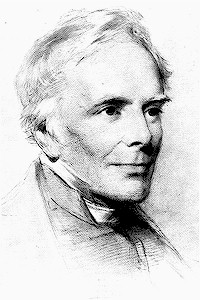
And if John Keble thought things were bad when the state abolished a few Irish dioceses, what would he have to say about this?

Thursday, March 3, 2011

The Society of the Holy Cross

Yesterday afternoon six seminarians from Trinity School for Ministry, including myself, joined the Pusey Guild, which is the portion of the Society of the Holy Cross (SSC) reserved for Seminarians. The SSC was founded by Charles Lowder and several other Anglo-Catholic priests to support the spiritual life of the clergy, by providing a rule life and a community to support each other in observing that rule. It is now the largest and oldest priestly society in the Anglican Communion.
We had a beautiful High Mass; Fr. Ralph Walker, SSC, Master of the Province of the Americas Celebrated, and Fr. Tom Hightower, SSC who is in charge of the Pusey Guild, preached a wonderful homily on the importance of keeping the Cross of Christ at the center of our lives as Christians and future priests, so that we can bring the good news of Jesus Christ to a disconnected and religiously indifferent culture. Fr. Walker also gave us a very moving exhortation to stay true to the vision of the Society's six founders. He pointed out that the SSC was founded by six priests, 156 years ago as of February 28, and that there are six of us who form this newest chapter of the Guild, and he called on us to follow the example of those six priests who dedicated their lives to preaching the gospel of Christ, and undertook to live truly cross shaped lives.
He also noted that the four great distinctives of the SSC are 1) its orthodox doctrine, 2) dignified and beautiful worship, 3) emphasis on pastoral care and 4) involvement in social concerns, especially ministry to the poor.
It is a great blessing to me to be part of the Pusey Guild at Trinity, and I pray that we will be a blessing to all our brothers and sisters at Trinity during our time here, and a blessing to those parishes, church plants or communities of whatever sort which will be under our care when we are ordained as presbyters in Christ's One, Holy, Catholic and Apostolic Church.
+ In Hoc Signo Vinces!

Tuesday, February 22, 2011

Comfort for Bad Evangelists

A Sermon On Ruth 1:15-22, delivered this morning, 2/22/11

And she said, “See, your sister-in-law has gone back to her people and to her gods; return after your sister-in-law.” But Ruth said, “Do not urge me to leave you or to return from following you. For where you go I will go, and where you lodge I will lodge. Your people shall be my people, and your God my God. Where you die I will die, and there will I be buried. May the LORD do so to me and more also if anything but death parts me from you.” And when Naomi saw that she was determined to go with her, she said no more.
So the two of them went on until they came to Bethlehem. And when they came to Bethlehem, the whole town was stirred because of them. And the women said, “Is this Naomi?” She said to them, “Do not call me Naomi; call me Mara, for the Almighty has dealt very bitterly with me. I went away full, and the LORD has brought me back empty. Why call me Naomi, when the LORD has testified against me and the Almighty has brought calamity upon me?”
So Naomi returned, and Ruth the Moabite her daughter-in-law with her, who returned from the country of Moab. And they came to Bethlehem at the beginning of barley harvest. (Ruth 1:15-22 ESV)

The book of Ruth is a story about two people with the odds completely stacked against them. In our reading for today, from the end of the first chapter of the book, Naomi does not appear as a very sympathetic figure. She is, by her own description, a bitter and hopeless person; moreover, In her own mind she was clear about who was to blame for her bitterness. The Lord has done this to her, and while she does not curse God, or even accuse God of injustice, it would be hard to say that she had any great hopes that God will come to her rescue.
On the other hand, it’s hard to blame her. In human terms her assessment of the situation was hardly inaccurate. She was an old woman, living in a patriarchal society, and all the men to whom she could have looked for help had died. She was an alien in Moab, the land of Israel’s enemies. She certainly had to return back to her own homeland, but even back in the land of Israel, she was living in the time of the Judges, and “In those days there was no king in Israel. Everyone did what was right in his own eyes” (Judges 21:25 ESV). And Naomi had done nothing to deserve or cause the disasters she had endured.
In light of all this, Naomi’s advice to her two Moabite daughters in law was quite reasonable, and they would have done well to follow it. She told them to go home, and find new husbands. They could not expect any security or comfort if they went with Naomi, neither could they offer her any help. Orpah, Ruth’s sister in law, does a perfectly honest and sensible thing by going home.
But it never seems to have crossed Ruth’s mind to leave her mother in law. She was determined, despite Naomi’s repeated advice, to leave behind everything and go with her. And for Ruth, this did mean leaving behind everything: Her home land, her people, her family, and - Most importantly - her God. She tells Naomi “where you go I will go, and where you lodge I will lodge. Your people shall be my people, and your God my God.” (Ruth 1:16 ESV)
Which is an extraordinary thing. Ruth was a Moabitess, as the author of the Ruth reminds us repeatedly, who grew up worshiping the God Chemosh, and what can she have known of Israel’s God besides what she heard from Naomi and Naomi’s family? And as we’ve seen, Naomi was hardly the world’s most convincing evangelist. She was angry, and bitter, and as for her family – they had all died childless in a foreign land. But Ruth abandoned Chemosh and the religion of Moab, and she decided to cast in her lot with Yaweh and his people Israel, when there was really no good reason she should have.
So what made Ruth decide that she should follow a strange God? I don’t know, but it’s fairly easy to say what didn’t make her chose Yahweh over Chemosh. It was not because she had any promise that things would go better for her in Israel, and it was not because Naomi painted an appealing picture of life as a member of God’s covenant people.
Which in a way is good. I don’t exactly want to commend Naomi’s evangelistic strategy - because she does come dangerously close to accusing God of injustice. On the other hand, Naomi is honest with Ruth. I may just be preaching to myself here, so forgive me if you don’t have this problem, but I find that when I am telling people about Jesus, I always want to tell them all the ways that their lives will become better if they have a personal relationship with Christ.
The problem with that is that, like Naomi, I am not a very convincing evangelist. Not only do I have plenty of moral failures, but my life is really not all that much happier than the lives of many unbelievers. In terms of happiness and success, my unbelieving friends would probably be better off staying in their own land of Moab, with Chemosh or some other deity of their choice.
Fortunately, Jesus did not really try to sell people on his message by promising them success or happiness. He called them to take up their crosses daily; He promised them temptation and persecutions and as all the martyrs from St. Stephen down to the martyrs of our own day could testify, he spoke truly. Jesus does not promise a happy life - but he does promise life. And it is only through faith in God’s promises that true life is to be found.
People do not really come to God because they think they will be “happier” or more prosperous, but because somehow God shows them that he is real, and he is good and he is worthy of our trust, even in the moments when it looks most foolish to trust. In the end, nothing we can say to anyone can prove that or convince them of it, unless God brings them to faith. Which is encouraging if, like Naomi, you are not a terribly good evangelist - because ultimately it does not depend on you. God is good, and he will make that known, as he did for Ruth, when she realized that against all good counsel and sense, she must abandon her people to become part of God’s people.
And her faith, as it turns out was not misplaced. God would prove to be trustworthy and not only would Ruth prosper, she would be the ancestor of David and, of course, of Jesus himself. But she did not believe because God had promised that, she simply believed and trusted God. And that, as it turns out, is one of what G. K. Chesterton would have called the paradoxes of Christianity: when we come to God hoping for any easy or a happy life, we will be disappointed. When we come to God seeking only God, leaving behind everything that would make us happy, we will be surprised to find happiness and blessings as well.
Amen.

Monday, February 21, 2011

Very sad . . .

I only heard today that Dr. Robert Crouse, a great classical Anglican scholar has recently passed away.
River Thames Beach Party has a brief obituary here.

Saturday, February 19, 2011

Living as Forgiven People; A Sermon

He entered Jericho and was passing through. And there was a man named Zacchaeus. He was a chief tax collector and was rich. And he was seeking to see who Jesus was, but on account of the crowd he could not, because he was small of stature. So he ran on ahead and climbed up into a sycamore tree to see him, for he was about to pass that way. And when Jesus came to the place, he looked up and said to him, “Zacchaeus, hurry and come down, for I must stay at your house today.” So he hurried and came down and received him joyfully. And when they saw it, they all grumbled, “He has gone in to be the guest of a man who is a sinner.” And Zacchaeus stood and said to the Lord, “Behold, Lord, the half of my goods I give to the poor. And if I have defrauded anyone of anything, I restore it fourfold.” And Jesus said to him, “Today salvation has come to this house, since he also is a son of Abraham. For the Son of Man came to seek and to save the lost.”
(Luke 19:1-10 ESV)

This morning’s Gospel is a pretty familiar story. It’s a memorable one, and it was always one of my favorites as a kid in Sunday school. I think it’s so memorable, because its actually kind of funny. Honestly, the first part of it is a not very subtle short joke. Zacchaeus is too short to see over the heads of the crowd around him, so after hopping up and down hoping to see over all the tall people, he finally gets frustrated and climbs a tree, just so he can get a glimpse of Jesus.
Zacchaeus probably hoped no one would spot him. He expected Jesus would walk on past, and he would get a chance to see what was so special about this Rabbi, and then Zacchaeus would go on with his life. But when Jesus got to the tree where Zacchaeus was hiding, he looked straight up at him, and called his name. We don’t know how Jesus recognized Zacchaeus, maybe someone pointed to the tree and said, “Hey look, there’s Zacchaeus.” It must have taken Zacchaeus by surprise. And any chance of going unnoticed was completely shot. The whole crowd was staring.
But Any embarrassment that Zacchaeus felt must have disappeared pretty quickly when he realized what Jesus was saying. Jesus tells him “Zacchaeus, hurry and come down, for I must stay at your house today.”
(Luke 19:5 ESV) Zacchaeus doesn’t hesitate - in fact, he’s overjoyed that Jesus has invited himself for dinner. He climbs down as quickly as he had climbed up.
The crowd wasn’t so thrilled though. “When they saw it, they all grumbled, “He has gone in to be the guest of a man who is a sinner.” (Luke 19:7 ESV) Zacchaeus, after all, was a tax collector, and in the first century Jewish world that meant a sinner. Tax collectors were on about the same social level as thieves and prostitutes.
There were good reasons why tax collectors were disliked. Most of the local tax collectors were Jewish, but their job was to collect the taxes levied by Rome. Effectively they were collaborators with an occupying government. And the work that tax collectors did required them to associate with Gentiles, making them ritually unclean, and unable to participate in temple worship. Devout Jews would avoid tax collectors as much as possible to avoid being “contaminated” themselves Also, one of the main ways tax collectors made their money was through extortion. They would charge more than the actual required taxes, and pocket the difference. Luke tells us that Zacchaeus was rich, which means he was a successful extortionist; He was also chief tax collector, in charge of a whole gang of crooks just like him.
I don’t think it would be an overstatement to say that Zacchaeus would have been viewed almost like a mob boss. He was rich a rich, successful crook, with political protection from the Roman authorities, and not the sort of man any respectable person would associate with. Certainly no Rabbi would honor a tax collector with a visit to his home.
But Jesus did.
The crowd was shocked - and we should be too. Zacchaeus was a terrible person.
And Jesus doesn’t seem to care. He doesn’t even wait for Zacchaeus to repent, before treating Zacchaeus as a friend. It’s as if Jesus is letting him off the hook.
Jesus disciples must have been confused, too. They remembered that not long before Jesus had met another rich man and treated him very differently.
If you’ll put up with a slight digression, I want to look at that story, because I think it’s important for understanding what Jesus was doing when he met Zacchaeus.
If you have a Bible in your pew, take it out, and open it to Luke 18:18, the chapter right before this morning’s reading, to the story of the rich ruler. If you don’t have a Bible in front of you, that’s okay too, because we’re not going to read the whole thing, I just want to hit some highlights.
It’s no accident that this story comes right before the story of Zacchaeus. The two stories are like mirror images. In the story of the rich ruler, a rich man, probably a young one, comes to Jesus and asks him “Good teacher, what must I do to inherit eternal life?” Jesus is surprisingly short with him. He tells him “You know the commandments, Do not commit adultery, do not murder, etc.”
And without hesitation, the rich man tells Jesus that he’s done all these things. He is sure he is righteous; he has kept all the commandments. Jesus does not argue with him, but he tells him, “One thing you still lack. Sell all that you have and distribute to the poor, and you will have treasure in heaven; and come follow me.”
The rich man becomes, as the ESV puts it, “Very Sad.” Then, Jesus tells the disciples how hard it is for a rich man to enter the kingdom of God. It’s easier for a camel to go through the eye of a needle. In other words, it’s impossible.
So one rich man comes to Jesus, addresses him as teacher, asks his advice, is told to sell everything, and hears that it is impossible for a rich man to enter the kingdom. When Zacchaeus is just curious to see the new Rabbi in town, Jesus makes no demand on him at all - Jesus even does him the honor of staying at his house.
So what’s the difference between these two rich men? The Rich Ruler probably was a good person, and he probably did keep the commandments. But he had missed the point. He thought that there was something he could do that would be enough to let him inherit eternal life. He trusted in his own ability, and not in God. As it turned out, he did not trust God enough to let go of the safety net that was his wealth.
Zacchaeus did not have the luxury of trusting in himself. He knew he was had no hope of getting eternal life by his good deeds, because he didn’t have that many good deeds. So when God came to him in the person of Jesus, when Jesus offered him forgiveness and showed him love, he could only respond with gratitude.
And the amazing thing is that because Zacchaeus had the experience of forgiveness and of grace, he was actually able to do what the other rich man couldn’t. He says to Jesus “Behold, Lord, the half of my goods I give to the poor. And if I have defrauded anyone of anything, I restore it fourfold.” (Luke 19:8 ESV). The experience of Grace and forgiveness transforms Zacchaeus.
I think most people come to Jesus the way the rich ruler did: We come hoping Jesus will tell us something that we can do for ourselves, sure that if Jesus will just tell us the three easy steps to salvation we can do it. And so, like the rich ruler, when we discover that we can’t do it, we go away very sad.
When we come like Zacchaeus in our brokenness, knowing that we really can’t do it, we discover that Jesus is ready to forgive us anyway. Like Zacchaeus, we discover that we are able to do what seemed impossible. Zacchaeus life became a witness to God’s grace, because he became a gracious person himself.
[I think another great example of what it means to live as a forgiven person can be found in the life of Thomas Cranmer. Most of you probably know a bit about Thomas Cranmer. He was the Archbishop of Canterbury during the English Reformation, and he is responsible for putting together most of the Book of Common Prayer, including the service we are using today.
Cranmer was a politically powerful man, but he was also known as a very kind man. His enemies would have said he was a pushover. There was even a joke that went around that if you wanted to make Archbishop Cranmer your friend for life, just do him some injury, and he would rush to forgive you. But if you read Cranmer’s writings, his letters and journals, you’ll discover that he was not just a nice man who wasn’t particularly suited to politics.
He knew exactly what he was doing. Cranmer was a man who knew that he was one of the lost, like Zacchaeus, whom Christ “came to seek and to save.” He knew that he had been forgiven, and that if God had forgiven him he also had to forgive those around him. He hoped to show them a glimpse of God’s grace and forgiveness in the way he treated them, and to point them back to the source of that grace. That is what it means to live as forgiven person: to live in a way that displays God’s love.
So like Zacchaeus, and like Cranmer, may we remember, that we are among the lost whom Jesus Christ came to “seek and to save,” and may we be people whose lives point to the power of God to redeem. As we have received grace, let us show grace, and as we have received forgiveness, let us offer forgiveness.

Friday, February 18, 2011

A sermon on Luke 20: 27 - 40.

There came to him some Sadducees, those who deny that there is a resurrection, and they asked him a question, saying, “Teacher, Moses wrote for us that if a man's brother dies, having a wife but no children, the man must take the widow and raise up offspring for his brother. Now there were seven brothers. The first took a wife, and died without children. And the second and the third took her, and likewise all seven left no children and died. Afterward the woman also died. In the resurrection, therefore, whose wife will the woman be? For the seven had her as wife.”
And Jesus said to them, “The sons of this age marry and are given in marriage, but those who are considered worthy to attain to that age and to the resurrection from the dead neither marry nor are given in marriage, for they cannot die anymore, because they are equal to angels and are sons of God, being sons of the resurrection. But that the dead are raised, even Moses showed, in the passage about the bush, where he calls the Lord the God of Abraham and the God of Isaac and the God of Jacob. Now he is not God of the dead, but of the living, for all live to him.” Then some of the scribes answered, “Teacher, you have spoken well.” For they no longer dared to ask him any question.
(Luke 20:27-40 ESV)


I am sure that the Saducees thought they were very clever when they asked Jesus their question about the resurrection. And they probably spent a long time coming up with the story in this gospel reading, which they were sure would silence all of Jesus’ talk about the resurrection. Jesus however, does not seem to have been especially impressed.
On one level the Saducees meant their question to be ridiculous. The story they tell Jesus is wildly unlikely, and even comical. For one thing, marrying this woman seems to be certain death. If this story had ever really happened, by the time the woman got to the third husband or so, someone would have gotten suspicious. . .
But the Saducees meant the story to be ridiculous.
They meant it to be ridicuolous, because they were not really asking a question, they were laying a trap. In the book of Acts, Luke tells us that the Saducees did not believe in the resurrection. They did not want to ask Jesus about the resurrection, they wanted to prove that the whole idea of resurrection is nonsense.
They wanted to make Jesus look as ridiculous as their story of these seven hapless brothers. To put this dialouge in context, Jesus has just cleansed the temple, and now he stands in the temple teaching. By cleansing the temple, he effectively declared himself the messiah, and so declared himself a higher authority than those whose business it was to look after the temple, people like the pharisees, saducees and scribes. So they wanted to discredit him. When they asked Jesus about the resurrection, they expected him to stand there blankly, exposed as a fraud in front of the whole crowd when he was unable to answer. The crowd would laugh, and Jesus would look like a fool.
But Jesus did answer, and it was the Saducees who walked away looking like fools.
Jesus answers the question in such a way that he not only refutes their argument, but gets at the very heart of their error. The real problem with the Saducees, is that they have too small a view of God. They think of God as a God who is only concerned with this life. We can see that from the question they ask. They create a scenario that is based totally on the values and necessities of the present age.
The practice of one brother marrying another’s widow to carry on the brother’s family name, was a custom that only applies in a world where death reigns and the best we can hope for is children to carry on the family name. The Saducees thought that the only immortality to be had was to be remembered by others. They only thought in human terms.
And they believed that God is only really concerned with this world, just like they were. The Saducees were so caught up in living to this world, and to other people, that they don’t see that “all live to God.”
They had a view of the world in which death was the end of everything, even of God’s care for his people. Which means that this life is all there is. If you have a bad life - or if, like the brothers in their story, you die childless - then that’s the end. There is no hope, no redemption. Maybe that’s why they were so protective of their own authority and position, and so offended when Jesus challenged it. It was all they could hope for.
They were so caught up in this way of thinking that they couldn’t see the resurrection when it was right in front of them. They couldn’t see it in the Scriptures, in God’s dialogue with Moses, which Jesus points to as evidence of God’s continued care for Abraham, Isaac and Jacob, even though they were long dead. And for the same reason, they could not recognize Jesus as the “resurrection and the life.” Of all people then, the Saducees were perhaps the least prepared to recognize Jesus.
In their eyes, Jesus would not have looked like a messiah, but like a failure. He was not a messiah who came offering worldly success or prosperity. He preached that the poor, the afflicted and the persecuted were blessed. Finally, like the brothers in the Sadducee’s story, he would die childless, and even abandoned by his friends. And that, the Saducees would have seen as the end of Jesus’ story.
The saducees were so fascinated by the things of this world and this age, that they could not see beyond it to the possibility of an age when the successes and failures of this world will not matter any more. Jesus’ response to their challenge exposes the worldliness at the heart of their question. We don’t know quite how they responded, except that they did not ask Jesus any more questions. Probably, they were angry, and probably most of them didn’t change their views and suddenly start believing in the resurrection.
But Jesus had given them the opportunity to do just that. By showing just how distorted their view of God and of his creation were, Jesus gave his opponents the opportunity to look at things from God’s view, and not from a human view.
It is tempting, when we read this passage, to try and use it to construct some theories about what the afterlife will look like, or about the nature of marriage, and its place in heaven. There is certainly material here for that, but I don’t think that is really why Luke recorded the story. I think he included it so that we, like the saducees, can have opportunity to consider whether our view of God is too small.
The Saducees thought that with Death, God’s concern for his people ended. We can fall into thinking that God’s care for us is limited, perhaps not by death, but by other circumstances. Especially when times are difficult, and we are in the midst of failure, we can forget even to call on God, we can think that God has forgotten or neglected us.
When you come to a point in ministry when you are not sure if you are reaching anyone at all; when your church plants are not growing, no matter how good the sermons are; when you find yourself trying to minister in a church where the leadership actually seems to be doing its best to oppose the gospel, and you feel very alone and defeated, those are the times when it is easy to forget that God still cares. Those are the times when we are tempted to fix things our own way and not wait for God.
This gospel reading is a reading for those times. Jesus is calling us to remember that God’s care is not limited to this world, and that the succeses and failures of this age are not ultimate. He is calling us to remember that we are not a children of this age, but of the resurrection. And Jesus himself, and his resurrection are our guarantee that God can overcome all things, even death.

Wednesday, February 2, 2011

Creation, Mystery and Intelligibility.

I am deeply drawn to mystery in my own spiritual life. I have frequently become frustrated with theologians who seemed to think that they had everything figured out and fitted into a system. Aquinas has been accused of being just such a systematician, a person who always has an answer to every question asked, and who leaves no place for wonder in the world. Fortunately, Josef Pieper corrected my misunderstanding of the Angelic Doctor. While Thomas Aquinas was incredibly methodical in his thought, he did not set out to create a system of theology which would answer every question and resolve every doubt. In his marvelous little book The Silence of St. Thomas, Pieper argues that mystery properly understood is vital to Aquinas's thought.
For St. Thomas, all real beings are potentially knowable by the human mind, because they are created things. That is, all things come from the mind of God - they are knowable because they are known by God.
On the other hand, Pieper argues that it is equally true to say that “the very element which makes [things] capable of being known, must necessarily be at the same time the reason why things are unfathomable” (Pieper, Silence of St. Thomas, 66) There remains in all things, even the simplest, something unknown to us, which prevents us from ever claiming a totally exhaustive knowledge of the world. The cause of this is the same as the cause of the knowability of the things.
To know a thing completely requires that we know a thing in its relation to the mind of the creator, a knowledge which is inaccessible to us in this life. Because things are created they are knowable, but because they are created there is in them a depth which the human mind cannot fathom. “Because things come forth from God... they partake wholly of the nature of the Logos, that is , they are lucid and limpid to their very depths... Because of their origin in the Logos they mirror an infinite light, and therefore cannot be comprehended” (99). Even in the world to come, in the very vision of God, God will not be fully comprehended, because God is infinite, and our minds are finite. Perhaps, as Gregory of Nyssa speculated in his Life of Moses, we can progress continually to a deeper and deeper vision of God, but we can never reach a point where we exhaust what there is to be known about God.
The doctrine of creation excludes the extremes of skepticism and of a rationalism which claims to have grasped everything. St. Thomas never finished the Summa Theologiae, and this is perhaps not so surprising. “Its fragmentary character belongs to the total implication of the Summa Theologica” (92) Aquinas did not fail in never completing the Summa; the Summa could not be finished, because there will always be more to know, and Aquinas knew that.
All this amounts to saying that for Thomas Aquinas, God and creation are profoundly mysterious.
I value this sense of mystery in Aquinas; what I love most about it is that it is a mystery that is not anti - rational. For Aquinas, things are mysterious not because they are unknowable and illogical, but because there is simply more to know about things than we could ever exhaust. We could never say all there is to say about a single mote of dust because that would finally be to say everything about the creator of that dust mote. Mystery lies in the fullness of reality, not in its emptiness or incoherence. Mystery never excuses us from trying to understand the world or from understanding God - rather mystery always calls us to seek for a deeper understanding.
Mystery does not just stop us in our tracks, but it draws us on in wonder, ever further in and closer to the very mind and heart of the creator.
To him be glory, for ever and ever
Amen.

Wednesday, January 12, 2011

Why Thomist Children Should Watch "The Incredibles"


I really enjoy cartoons, I have to admit. I even like Anime.
It doesn't matter if the animations are hand drawn or CGI, as long as they are done artfully, and with some aesthetic sense. That's why I love Pixar. I think Pixar has probably been the best thing to happen to American animation since Walt Disney created Mickey Mouse. In terms of the sheer artistry and technical skill displayed in their animations, and in terms of character development, dialogue, pacing and plot, Pixar films far excel the attempts of their less creative competitor Dreamworks.
Dreamworks, of course, was the studio that brought you the interminable Shrek series, in all its tedious, strained, pop-culture humor.
Don't get me wrong, I really liked the first Shrek. It was clever, and funny and I really appreciated the ending of the movie. Shrek 2 even had its points. If you don't find Antonio Banderas's send up of himself as Puss in Boots funny, you probably don't actually have a sense of humor, and should seek medical attention from a specialist. In any case, I will have more to say about Shrek later.

Why then, should Thomist Children watch The Incredibles in particular? Leaving aside for the moment whether there are such beings as Thomist Children, there are several reasons. First of all, this is one of the few "family" films of recent years that actually centers around the much scorned nuclear family. Seriously, so many children's films actually set out to undermine the whole notion of family and its importance. Usually, they do this with good intentions, but there is a famous road paved with such intentions.
The Incredibles, however, celebrates the family and a major theme of the film is the importance of being a responsible member of the family. Which leads to the real reason why Thomist Children should watch this movie: The Incredibles is a movie about Virtue. That may sound odd, but it's true. Here is the key scene (in my opinion):


Dash, the son of two super heroes, sums up the basic conflict of the film here: When everyone is special, no one is.
In case you don't know about the plot of The Incredibles, I will explain (spoiler alert). It's a story about the daily lives of a couple of married super -heroes, who have retired from the business of saving the world. They have not retired by choice, but because Super - Heroism has been outlawed. In the opening sequence of the movie we learn that what defeated Super - Heroes was not super villains, but bureaucrats and lawyers. Mr. Incredible made the mistake of saving a man who was trying to kill himself by jumping off a ledge. The suicidal man survives, but proceeds to bring a lawsuit against Mr. Incredible for emotional distress. His lawyer tells the assembled press, "My Client didn't ask to be saved. Mr. Incredible's actions were irresponsible."
A chain of lawsuits follows and eventually it becomes impossible for Super Heroes to operate at all.

So Mr. Incredible, with his superpowered wife, ElastiGirl, retires and gets a soul killing office Job at an insurance company. Meanwhile he and his wife have three superpowered kids, who are forbidden to use their powers, for fear that their carefully constructed cover could be blown. The family has been strained to the breaking point by their unfortunately successful attempt to remain mediocre.

Eventually, this becomes too much for Mr. Incredible, who secretly resumes super - heroics without the knowledge of his wife or family. Eventually, his dishonesty leads to disaster, and his whole family is put in danger when they are discovered by an ambitious young super - villain.

Despite the dangerous situation they are placed in by Mr. Incredible's recklessness, the family is actually saved by finally having the chance to use their powers. When they are forced to defend themselves and employ their powers, they actually become much better individuals and a stronger family.
Mr. Incredible makes a terrible mistake by lying to his family, and that is portrayed as a mistake, but he is not mistaken in trying to be, well. . . incredible.

This movie is all about using everything you have been given to be an excellent person. I have heard some people remark that this film must have been influenced by Ayn Rand, but I see more of Aristotle in it. For one thing, Ayn Rand had no time for family or children. Her stories, it's true, emphasize the goodness of personal excellence and fulfillment, but from what I can tell, she recognized no external constraints upon the individual. For example, Rourke, the hero of The Fountainhead, has no qualms about stealing his best friend's wife (Rand provides some pseudo-rational justification for this). In The Incredibles, Mr. Incredible fails to be a hero when he neglects his responsibilities to his family. He becomes a Hero at the same time he becomes a responsible husband and father. The personal fulfillment of the characters comes not as individuals, but as a family. They take responsibility for each other and help each other.

Their happiness is not a happiness of individual fulfillment at the expense of others, but a happiness which consists in self sacrifice and responsibility. In the world of The Incredibles it is precisely in the context of the family, with all of its inconveniences and irritations, that personal excellence is achieved. In Aristotle's thought, virtue is precisely human excellence of this sort. Aristotle, like most of the Greeks, would also have encouraged a little healthy competition amongst men of virtue. Virtue should be recognized and rewarded, and attempts to say "everyone is special" even when they have achieved nothing in particular, undervalue the achievements of really virtuous men and women. The virtuous are right to demand the chance to exercise their virtue, and right to demand that their virtues be recognized for what they are.

A key point in Aristotle's thought, though, which separates him from thinkers like Nietzsche and, to a lesser extent, Ayn Rand, is that he does not understand Human excellence to consist either in the arbitrary exercise of the will, or to be something which an individual can attain alone. Virtue is reasonable, not arbitrary, and it is social, not individual. For Aristotle, a virtuous person must also be a man who lives and interacts with other men and women in society.

And society, of course, starts with the family. Catholic Christian thought has developed this insight quite deeply, but it is present in the better part of Aristotle's thought as well (See Book 1, c. 2 of The Politics) . At his best, Aristotle acknowledges the importance of the family, against his teacher Plato, who would have given over the care of children to the state.

So in its emphasis upon virtue, I would say The Incredibles is an Aristotelian movie, and in its emphasis upon family, responsibility and self sacrifice, it is a Christian movie. Of course, the movie is not perfect, and in a certain sense it is not Christian or even religious. There is no mention of God at all. I doubt the director thought about catholic Christian understandings of the family and Aristotelian ideas of virtue at all when he made this movie. But in its basic way of seeing the world, it fits more with a Christian (specifically a Thomistic) world view than with any other view.

Now, it might rightly be asked, are children's films not trivial things, unsuitable as a topic for a blog which claims to be about Christian theology? In a way yes, and in a way no. Any given Children's movie probably is trivial, but children's movies as a whole are extremely important. Children and adults are both formed by the stories we read and watch. The stories we tell our children shape their imaginations in incredibly important ways. Stories, I am convinced, are the basic ways that we make sense of the world. They give us the unstated assumptions upon which most of our actions are based. If children are brought up watching movies where family doesn't matter, and "everyone is special" and happiness is nothing but a contented mediocrity, then they will believe these lies without even realizing what they believe. Children need stories that put them in a position to understand the truth when they actually hear it articulated.
By itself, The Incredibles is not very important, and it is not sufficient (for one thing, there is the aforementioned absence of God). But it is basically the right kind of story.

In this it is different from most of the children's movies that dominate the market; movies like Shrek and its endless sequels. The Shrek films are funny, but they are pervaded with a winking cynicism that, to me at least, seems unwholesome. They are parodies, and parodies are finally uncreative and derivative by their nature, no matter how funny they may be. They also thrive on reversals and irony. The Ogre becomes the knight, the handsome prince turns out to be the villain, and of course, the beautiful princess becomes an ugly ogress - but that's good, because physical beauty is really only superficial and deceptive.
Or take for example, Dreamworks' most recent offering Despicable Me, about a super villain with a heart of gold. Again, it is parody and reversal: the Super villain becomes the super hero.
As far as all this goes, there is nothing wrong with it. Beauty can be deceptive, the supposed good guys can turn out to be bad guys.

Every now and then, we need a good parody to remind us not to take ourselves to seriously, or to point out the hypocritical or the trite, but when parody becomes the mainstay, it is a sign of decadence. Human imaginations can't survive on irony alone. When every film stars a villain as the hero, it shows that we have lost faith in heroes. And if children constantly see heroic persons portrayed as ridiculous, and ridiculous persons portrayed as heroic, what will that do to their view of the world? Who will they want to grow up to be, the knight or the ogre?
The starting point needs to be stories where goodness and beauty are simply good and beautiful, where heroes are really heroic.
The Incredible's manages to portray genuine heroism without irony, and equally without tedious sermonizing. I wish there were more kids movies like that.