I had the privilege to preach on Good Friday at my sponsoring parish. Here it is.
I’m never really sure how to greet people on Good Friday. You can’t really wish people a happy Good Friday. I have one friend who always wishes me a gloomy Good Friday, but somehow I don’t think most people would appreciate that sentiment.
Which only goes to show what a strange day Good Friday is. A few years back I was at an Easter service, with a friend who is not a Christian, but who had decided to come to Church with me and some other friends on Easter Sunday. As we were waiting for the Service to start we were having a conversation, and she was asking a lot of questions about what exactly Christians believe about Jesus.
At some point my friend asked “so you believe that Jesus is coming back?” of course I said yes, we expect that Jesus will return. “So” she asked “Will he get it right when he comes back?” I was a little confused by this question, so I asked what she meant. And she explained, “Well, obviously he failed the first time he came. I mean, he got crucified. So when he comes back, will he do better the second time.” My friend had the most natural possible response to the events of good Friday. Good Friday looks like a failure. It looks like something we should be a little embarrassed about, not something we should celebrate. Good Friday does not look Good at all.
But I had to explain to my friend, what I am sure you all already know. The cross was not a failure or an accident. From the beginning everything was leading up to this day and this hour, to this hill of Calvary. Earlier in John’s Gospel, Jesus foretold his death and prayed “Now is my soul troubled. And what shall I say? ‘Father, save me from this hour’? But for this purpose I have come to this hour. Father, glorify your name.” Then a voice came from heaven: “I have glorified it, and I will glorify it again.” (John 12:27 ESV).
Jesus prays that God will glorify his name, and God does just that, but he does it in the Cross. Crucifixion was a painful and humiliating way to die; and according to the book of Deuteronomy, everyone who died hanging on a tree was cursed by God (Deut 21:23). The great irony of the gospel is that in this shameful death God’s own glory shows forth most clearly.
Jesus told his disciples “Whoever has seen me has seen the Father” (John 14:9). When we look at Jesus we see what God the Father is like. And Jesus himself was never more visible than when he was on the cross. He was literally exalted, lifted up, for the whole world to see. And what most people saw in the cross was failure. What Mary and John standing at the foot of the cross saw, and what everyone who understood saw, was justice and love.
The cross was God’s judgment on the world, and the proof of his justice. The judgment of the world is that when the world saw God in the flesh, we rejected him. Those who crucified Jesus took it on themselves to condemn the judge of the universe. In rejecting Jesus they proved that they were not of God, but of the world. Even the priests of God, who should have been ready to receive Jesus as king, turn away from him, and say “we have no king but Caesar!” They cast in their lot with the kingdom of the world, rather than the kingdom of God.
The cross is the place where God judged the world, but at one and the same time it is the place where God forgave the world. On Good Friday, God made our sin his problem. God could have judged and rejected the world, just like the world had rejected him. Instead, God endures judgment himself for our sake. Jesus does not climb down from the cross and call a legion of Angels to destroy Pilate and the high priests. He endures the judgment of the world, and the judge is judged in our place.
There is a story that I heard some years ago, that is probably made up, but which shows very well what Jesus is doing on the Cross. In the story, two boys grow up as childhood friends. As they get older, they go their separate ways. One becomes a lawyer and the other drifts off into a life of petty crime. The lawyer eventually becomes a judge, and years later he and his childhood friend are reunited, unfortunately they are reunited in court when the friend has been brought in on charges of some crime. If the judge was going to be just, he had to follow the law and fine his friend - even though his friend, who has not been a successful crook, cannot possibly afford to pay the fine.
The judge handed down the judgment. He didn’t let his friend off the hook. What he did instead, once the hearing was over, was to come to his friend and say I know you can’t pay this fine, but I will give you the money, I will take the penalty for you, so that you can go free. That’s just what Jesus does on the cross.
God’s forgiveness does not mean ignoring evil - that would be unjust - instead, it means that God recognizes the evil that has been done and judges it, but he does not leave it there. That would be how the world deals with evil. God’s way of dealing with evil is not like the world’s way though. Instead, God takes our problem and makes it his problem.
St John in one of his letters says “By this we know love, that he laid down his life for us...” (1 John 3:16). When we see Jesus lifted up on the cross, we see that we have a God who loves us enough to go even to the point of going to the cross in order to save his people from sin and death. This was a shocking idea in the Ancient world, and it should be just as shocking to us. We have a God whose whole heart is love for those who rejected him.
And even though the world rejected Christ, Christ does not reject the world. Instead, in the shadow of the cross, he begins to form a new community. When he looks at his mother and at John the Beloved disciple, he says “Woman behold you son” and to John, “behold your mother.” Partly, Jesus is just being a good son, and providing for his mother. But he is doing more. He is changing the relationship between these two people, and he is forming a new community. This community is a family, the family of God, and it is the community that each of us joined when we were baptized.
If we’re God’s family, there ought to be a family resemblance between God and his children. St. John says that we know God loves us, because he laid down his life for us, and he goes on to say “And we ought to lay down our lives for the brothers” (1 John 3:16). What God has done for us, we are called to do for others. We are called to follow Christ’s example of the cross, and give our lives for others. We do that, I think, not so much by literal death - although that is sometimes what God calls for - but by being people who show God’s forgivness to the world.
When we forgive, we do something which looks impossible to the world. It looks like we are ignoring evil when we forgive. But we are not ignoring evil or letting people get away with it; instead, we are dealing with evil by way of the cross. This will always involve some sacrifice on our part, just as it did on God’s part. It will mean taking up our cross, and following Jesus to Calvary, where God judged and forgave us.
This will look like foolishness when we do it, just like it looked foolish when God did it. God’s way of dealing with evil is not the world’s way of dealing with evil. But God’s way, as it turns out, is the only way that works at all; it’s the only way that can lead from death to life, and Good Friday turns out to be good after all, because it leads to Easter.
+In the name. . .
Thursday, April 28, 2011

Tuesday, April 19, 2011
Beautiful Words from Dom Gregory Dix

This is a well know passage from Dom Gregory Dix's classic, but now somewhat outdated book, The Shape of the Liturgy. It is a reflection on Christ's words, "Do this in remembrance of me."
Was ever a command so obeyed? For century after century, spreading slowly to every continent and country and among every race on earth, this action has been done, in every conceivable circumstance, for every conceivable human need from infancy and before it to extreme old age and after it, from the pinnacles of human greatness to the refuge of fugitives in the caves and dens of the earth. Men have found no better thing than this to do for kings at their crowning and for criminals going to the scaffold; for armies in triumph or for a bride and bridegroom in a little country church; for the proclamation of a dogma or for a good crop of wheat; for the wisdom of the Parliament of a mighty nation or for a sick old woman afraid to die; for a schoolboy sitting an examination or for Columbus setting out to discover America; for the famine of whole provinces or for the soul of a dead lover; in thankfulness because my father did not die of pneumonia; for a village headman much tempted to return to fetich because the yams had failed; because the Turk was at the gates of Vienna; for the repentance of Margaret; for the settlement of a strike; for a son for a barren woman; for Captain so-and-so, wounded and prisoner-of-war; while the lions roared in the nearby amphitheatre; on the beach at Dunkirk; while the hiss of scythes in the thick June grass came faintly through the windows of the church; tremulously, by an old monk on the fiftieth anniversary of his vows; furtively, by an exiled bishop who had hewn timber all day in a prison camp near Murmansk; gorgeously, for the canonisation of S. Joan of Arc — one could fill many pages with the reasons why men have done this, and not tell a hundredth part of them. And best of all, week by week and month by month, on a hundred thousand successive Sundays, faithfully, unfailingly, across all the parishes of christendom, the pastors have done this just to make the plebs sancta Dei — the holy common people of God.h/t: The Anglo-Catholic
Saturday, March 26, 2011
Ritualism is good for your health.
Apparently recent studies have shown that Frankincense contains a chemical with a mild psychoactive effect that counteracts depression and makes you happy. I have always said we needed more incense in our church services.
Read all about it here.
Read all about it here.
Friday, March 25, 2011
The Angel of the Lord Announced Unto Mary . . .
 A sermon on Romans 2:25-3:18, Jeremiah 5:1-9 and John 5:30-47 March 25, 2011,
Feast of the Annunciation. Preached at the Trinity Chapel.
Today we are exactly 9 months away from Christmas. it’s the feast of the annunciation, when “the Angel announced unto Mary and she conceived by the Holy Ghost.” It seems ironic that the Angel’s announcement of the one “who will save his people from their sins” should come in the middle of Lent, and that this feast should be marked by readings that speak of God’s judgment. Especially incongruous is the reading from Romans where Paul specifically speaks of God’s judgment against Israel, the same people Jesus came to save.
This reading is a key part of Paul’s argument in Romans. In the first chapter he established that God’s wrath and judgment rest on all the gentiles. This wouldn’t have surprised any Jewish readers: Gentiles were, by definition, idolaters, outside God’s covenant and the sphere of his grace. A pious Jewish reader might have come to the end of C. 1 and been excused a sigh of relief, and a prayer of thanks for the good fortune to have been born into the covenant people.
The Apostle doesn’t let his audience enjoy that relief for long though. The Jewish people, the covenant people, also stand condemned before God. “Circumcision,” Paul says “is indeed of value if you obey the Law, but if you break the Law, your circumcision becomes uncircumscision” (ESV, 3:25). Now Paul’s claim that the Jews had failed to keep the Law must have sounded strange. Paul himself says in Philippians that he was blameless at to righteousness under the Law (Phil. 3:6). And I don’t doubt that there were many Jewish men and women who could have said the same. They had kept the Law; They had sinned, fair enough, but the Law made provision for forgiveness through sacrifice. So for what fault could God possibly condemn them?
What Paul saw when his attempt to stamp out Jesus’ followers was interrupted by conversion, was that even though he was blameless with respect to the Law, he had completely missed the point of the Law. The Law is, as Paul said, “the embodiment of knowledge and truth” (2:20), and the Truth which the Law spoke of was the Truth of Jesus Christ. Jesus himself says “if you believed Moses, you would believe me; for he wrote of me” (John 5:46 ESV).
It’s not so ironic after all that we read this on the feast of the Annunciation, because the judgment against God’s people was precisely what the Angel announced to Mary. God had come to dwell with us, to save his people from their sins - this was the truth to which the Law bore witness. The world rejected this truth. St. John says “this is the judgment: the Light has come into the world, and people loved darkness rather than the Light” (John 3:19). It is the Gospel, as much as the Law, which judges us.
The Prophet Jeremiah searched among the wealthy and the wise, looking for a righteous man, and was disappointed. Israel had the spiritual wealth and wisdom of the Law, they were “entrusted with the oracles of God,” but they became no better than the Gentiles when they rejected the only one who perfectly embodied the Law God had given them. That’s why Paul can say that the Jews had every advantage (3:1-2), and yet were no better off for it (3:9). All of humanity, Gentile or Jew, is under God’s righteous judgment.
Now at this point I picture Paul’s hypothetical Jewish reader throwing up his hands in frustration and saying “Well what are we supposed to do then? We did all the right things! But we’re guilty anyway, judged anyway. What more can we possibly do?” But that’s exactly it: we can’t do anything!
Our whole problem is that we try so hard to do something; we want to establish our own righteousness apart from God. We’ve been doing it since the Garden of Eden, when we wanted to be like God, when we tried to deny our dependence on him. And anything we do, whether circumcision, or Baptism, or even the Holy Eucharist, just becomes a more subtle form of idolatry when we attempt to use it as a way to prove our righteousness, rather than a sign of our total dependence on God.
So again, what can we do? In Christ we have heard God’s judgment that “None is righteous.” And the only thing we can do is respond to God’s judgment with our “Amen.” We can admit that God is righteous, that we deserve the sentence of Death which was carried out on the Cross, that we’re helpless before God. This isn’t despair: it is faith and it is repentance.
It’s not despair, because we have not just been judged, we have been judged in Jesus Christ. The Cross is our judgment, and to believe that we have been judged in Christ and his cross is at the same time to believe that we have been raised with Christ. As soon as we accept that we are unjust and have been judged in Christ, we will also hear that we are justified in him.
So as we go through Lent, and we fast and pray and practice Christian disciplines, may those things not become distractions from God, but reminders of our need for God, so that when Good Friday comes we can really say Amen to the Cross and passion, and rejoice in the Glory of Easter.
Tuesday, March 8, 2011
A Orthodox Quote on Chrisitan Mysticism from a Heterodox Source
"In Giving us his love, God has given us his Holy Ghost so that we can love him with tthe love wherewith he loves himself. We love God with his own love . . ." Meister Eckhart, quoted by Thomas Merton in Zen and the Birds of Appetite.
Saturday, March 5, 2011
National Apostasy anybody?
This is not a political blog, not even an ecclesiastically political blog, but I feel like I have to post about this.
Perhaps you have all heard the recent news from the UK.
Owen and Eunice Johns, who have been foster parents for a number of years now, have been told by a judge in England that their conservative Christian views on homosexuality exclude them from being suitable foster parents, because their views might be harmful to children.
Now first, I think this is an outrageous and totalitarian decision, but what really gets me is that the judge says there is no place for Christianity in the laws of England. . .
Really? Last I checked there is still a body called the CHURCH OF ENGLAND. Maybe it is because I am an American, but I cannot grasp the sheer madness of a judge in an avowedly CHRISTIAN NATION WITH A STATE CHURCH saying that Christianity has no place in the laws of the nation. That makes some sense in an nation like the United States of America, but how can it possibly even be uttered in anything but jest in an English law court?
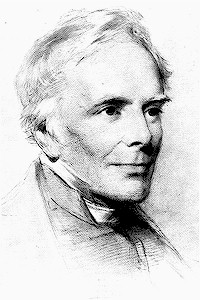
And if John Keble thought things were bad when the state abolished a few Irish dioceses, what would he have to say about this?

Perhaps you have all heard the recent news from the UK.
Owen and Eunice Johns, who have been foster parents for a number of years now, have been told by a judge in England that their conservative Christian views on homosexuality exclude them from being suitable foster parents, because their views might be harmful to children.
Now first, I think this is an outrageous and totalitarian decision, but what really gets me is that the judge says there is no place for Christianity in the laws of England. . .
Really? Last I checked there is still a body called the CHURCH OF ENGLAND. Maybe it is because I am an American, but I cannot grasp the sheer madness of a judge in an avowedly CHRISTIAN NATION WITH A STATE CHURCH saying that Christianity has no place in the laws of the nation. That makes some sense in an nation like the United States of America, but how can it possibly even be uttered in anything but jest in an English law court?
And if John Keble thought things were bad when the state abolished a few Irish dioceses, what would he have to say about this?
Thursday, March 3, 2011
The Society of the Holy Cross
Yesterday afternoon six seminarians from Trinity School for Ministry, including myself, joined the Pusey Guild, which is the portion of the Society of the Holy Cross (SSC) reserved for Seminarians. The SSC was founded by Charles Lowder and several other Anglo-Catholic priests to support the spiritual life of the clergy, by providing a rule life and a community to support each other in observing that rule. It is now the largest and oldest priestly society in the Anglican Communion.
We had a beautiful High Mass; Fr. Ralph Walker, SSC, Master of the Province of the Americas Celebrated, and Fr. Tom Hightower, SSC who is in charge of the Pusey Guild, preached a wonderful homily on the importance of keeping the Cross of Christ at the center of our lives as Christians and future priests, so that we can bring the good news of Jesus Christ to a disconnected and religiously indifferent culture. Fr. Walker also gave us a very moving exhortation to stay true to the vision of the Society's six founders. He pointed out that the SSC was founded by six priests, 156 years ago as of February 28, and that there are six of us who form this newest chapter of the Guild, and he called on us to follow the example of those six priests who dedicated their lives to preaching the gospel of Christ, and undertook to live truly cross shaped lives.
He also noted that the four great distinctives of the SSC are 1) its orthodox doctrine, 2) dignified and beautiful worship, 3) emphasis on pastoral care and 4) involvement in social concerns, especially ministry to the poor.
It is a great blessing to me to be part of the Pusey Guild at Trinity, and I pray that we will be a blessing to all our brothers and sisters at Trinity during our time here, and a blessing to those parishes, church plants or communities of whatever sort which will be under our care when we are ordained as presbyters in Christ's One, Holy, Catholic and Apostolic Church.
+ In Hoc Signo Vinces!
We had a beautiful High Mass; Fr. Ralph Walker, SSC, Master of the Province of the Americas Celebrated, and Fr. Tom Hightower, SSC who is in charge of the Pusey Guild, preached a wonderful homily on the importance of keeping the Cross of Christ at the center of our lives as Christians and future priests, so that we can bring the good news of Jesus Christ to a disconnected and religiously indifferent culture. Fr. Walker also gave us a very moving exhortation to stay true to the vision of the Society's six founders. He pointed out that the SSC was founded by six priests, 156 years ago as of February 28, and that there are six of us who form this newest chapter of the Guild, and he called on us to follow the example of those six priests who dedicated their lives to preaching the gospel of Christ, and undertook to live truly cross shaped lives.
He also noted that the four great distinctives of the SSC are 1) its orthodox doctrine, 2) dignified and beautiful worship, 3) emphasis on pastoral care and 4) involvement in social concerns, especially ministry to the poor.
It is a great blessing to me to be part of the Pusey Guild at Trinity, and I pray that we will be a blessing to all our brothers and sisters at Trinity during our time here, and a blessing to those parishes, church plants or communities of whatever sort which will be under our care when we are ordained as presbyters in Christ's One, Holy, Catholic and Apostolic Church.
+ In Hoc Signo Vinces!
Tuesday, February 22, 2011
Comfort for Bad Evangelists
A Sermon On Ruth 1:15-22, delivered this morning, 2/22/11
And she said, “See, your sister-in-law has gone back to her people and to her gods; return after your sister-in-law.” But Ruth said, “Do not urge me to leave you or to return from following you. For where you go I will go, and where you lodge I will lodge. Your people shall be my people, and your God my God. Where you die I will die, and there will I be buried. May the LORD do so to me and more also if anything but death parts me from you.” And when Naomi saw that she was determined to go with her, she said no more.
So the two of them went on until they came to Bethlehem. And when they came to Bethlehem, the whole town was stirred because of them. And the women said, “Is this Naomi?” She said to them, “Do not call me Naomi; call me Mara, for the Almighty has dealt very bitterly with me. I went away full, and the LORD has brought me back empty. Why call me Naomi, when the LORD has testified against me and the Almighty has brought calamity upon me?”
So Naomi returned, and Ruth the Moabite her daughter-in-law with her, who returned from the country of Moab. And they came to Bethlehem at the beginning of barley harvest. (Ruth 1:15-22 ESV)
The book of Ruth is a story about two people with the odds completely stacked against them. In our reading for today, from the end of the first chapter of the book, Naomi does not appear as a very sympathetic figure. She is, by her own description, a bitter and hopeless person; moreover, In her own mind she was clear about who was to blame for her bitterness. The Lord has done this to her, and while she does not curse God, or even accuse God of injustice, it would be hard to say that she had any great hopes that God will come to her rescue.
On the other hand, it’s hard to blame her. In human terms her assessment of the situation was hardly inaccurate. She was an old woman, living in a patriarchal society, and all the men to whom she could have looked for help had died. She was an alien in Moab, the land of Israel’s enemies. She certainly had to return back to her own homeland, but even back in the land of Israel, she was living in the time of the Judges, and “In those days there was no king in Israel. Everyone did what was right in his own eyes” (Judges 21:25 ESV). And Naomi had done nothing to deserve or cause the disasters she had endured.
In light of all this, Naomi’s advice to her two Moabite daughters in law was quite reasonable, and they would have done well to follow it. She told them to go home, and find new husbands. They could not expect any security or comfort if they went with Naomi, neither could they offer her any help. Orpah, Ruth’s sister in law, does a perfectly honest and sensible thing by going home.
But it never seems to have crossed Ruth’s mind to leave her mother in law. She was determined, despite Naomi’s repeated advice, to leave behind everything and go with her. And for Ruth, this did mean leaving behind everything: Her home land, her people, her family, and - Most importantly - her God. She tells Naomi “where you go I will go, and where you lodge I will lodge. Your people shall be my people, and your God my God.” (Ruth 1:16 ESV)
Which is an extraordinary thing. Ruth was a Moabitess, as the author of the Ruth reminds us repeatedly, who grew up worshiping the God Chemosh, and what can she have known of Israel’s God besides what she heard from Naomi and Naomi’s family? And as we’ve seen, Naomi was hardly the world’s most convincing evangelist. She was angry, and bitter, and as for her family – they had all died childless in a foreign land. But Ruth abandoned Chemosh and the religion of Moab, and she decided to cast in her lot with Yaweh and his people Israel, when there was really no good reason she should have.
So what made Ruth decide that she should follow a strange God? I don’t know, but it’s fairly easy to say what didn’t make her chose Yahweh over Chemosh. It was not because she had any promise that things would go better for her in Israel, and it was not because Naomi painted an appealing picture of life as a member of God’s covenant people.
Which in a way is good. I don’t exactly want to commend Naomi’s evangelistic strategy - because she does come dangerously close to accusing God of injustice. On the other hand, Naomi is honest with Ruth. I may just be preaching to myself here, so forgive me if you don’t have this problem, but I find that when I am telling people about Jesus, I always want to tell them all the ways that their lives will become better if they have a personal relationship with Christ.
The problem with that is that, like Naomi, I am not a very convincing evangelist. Not only do I have plenty of moral failures, but my life is really not all that much happier than the lives of many unbelievers. In terms of happiness and success, my unbelieving friends would probably be better off staying in their own land of Moab, with Chemosh or some other deity of their choice.
Fortunately, Jesus did not really try to sell people on his message by promising them success or happiness. He called them to take up their crosses daily; He promised them temptation and persecutions and as all the martyrs from St. Stephen down to the martyrs of our own day could testify, he spoke truly. Jesus does not promise a happy life - but he does promise life. And it is only through faith in God’s promises that true life is to be found.
People do not really come to God because they think they will be “happier” or more prosperous, but because somehow God shows them that he is real, and he is good and he is worthy of our trust, even in the moments when it looks most foolish to trust. In the end, nothing we can say to anyone can prove that or convince them of it, unless God brings them to faith. Which is encouraging if, like Naomi, you are not a terribly good evangelist - because ultimately it does not depend on you. God is good, and he will make that known, as he did for Ruth, when she realized that against all good counsel and sense, she must abandon her people to become part of God’s people.
And her faith, as it turns out was not misplaced. God would prove to be trustworthy and not only would Ruth prosper, she would be the ancestor of David and, of course, of Jesus himself. But she did not believe because God had promised that, she simply believed and trusted God. And that, as it turns out, is one of what G. K. Chesterton would have called the paradoxes of Christianity: when we come to God hoping for any easy or a happy life, we will be disappointed. When we come to God seeking only God, leaving behind everything that would make us happy, we will be surprised to find happiness and blessings as well.
Amen.
And she said, “See, your sister-in-law has gone back to her people and to her gods; return after your sister-in-law.” But Ruth said, “Do not urge me to leave you or to return from following you. For where you go I will go, and where you lodge I will lodge. Your people shall be my people, and your God my God. Where you die I will die, and there will I be buried. May the LORD do so to me and more also if anything but death parts me from you.” And when Naomi saw that she was determined to go with her, she said no more.
So the two of them went on until they came to Bethlehem. And when they came to Bethlehem, the whole town was stirred because of them. And the women said, “Is this Naomi?” She said to them, “Do not call me Naomi; call me Mara, for the Almighty has dealt very bitterly with me. I went away full, and the LORD has brought me back empty. Why call me Naomi, when the LORD has testified against me and the Almighty has brought calamity upon me?”
So Naomi returned, and Ruth the Moabite her daughter-in-law with her, who returned from the country of Moab. And they came to Bethlehem at the beginning of barley harvest. (Ruth 1:15-22 ESV)
The book of Ruth is a story about two people with the odds completely stacked against them. In our reading for today, from the end of the first chapter of the book, Naomi does not appear as a very sympathetic figure. She is, by her own description, a bitter and hopeless person; moreover, In her own mind she was clear about who was to blame for her bitterness. The Lord has done this to her, and while she does not curse God, or even accuse God of injustice, it would be hard to say that she had any great hopes that God will come to her rescue.
On the other hand, it’s hard to blame her. In human terms her assessment of the situation was hardly inaccurate. She was an old woman, living in a patriarchal society, and all the men to whom she could have looked for help had died. She was an alien in Moab, the land of Israel’s enemies. She certainly had to return back to her own homeland, but even back in the land of Israel, she was living in the time of the Judges, and “In those days there was no king in Israel. Everyone did what was right in his own eyes” (Judges 21:25 ESV). And Naomi had done nothing to deserve or cause the disasters she had endured.
In light of all this, Naomi’s advice to her two Moabite daughters in law was quite reasonable, and they would have done well to follow it. She told them to go home, and find new husbands. They could not expect any security or comfort if they went with Naomi, neither could they offer her any help. Orpah, Ruth’s sister in law, does a perfectly honest and sensible thing by going home.
But it never seems to have crossed Ruth’s mind to leave her mother in law. She was determined, despite Naomi’s repeated advice, to leave behind everything and go with her. And for Ruth, this did mean leaving behind everything: Her home land, her people, her family, and - Most importantly - her God. She tells Naomi “where you go I will go, and where you lodge I will lodge. Your people shall be my people, and your God my God.” (Ruth 1:16 ESV)
Which is an extraordinary thing. Ruth was a Moabitess, as the author of the Ruth reminds us repeatedly, who grew up worshiping the God Chemosh, and what can she have known of Israel’s God besides what she heard from Naomi and Naomi’s family? And as we’ve seen, Naomi was hardly the world’s most convincing evangelist. She was angry, and bitter, and as for her family – they had all died childless in a foreign land. But Ruth abandoned Chemosh and the religion of Moab, and she decided to cast in her lot with Yaweh and his people Israel, when there was really no good reason she should have.
So what made Ruth decide that she should follow a strange God? I don’t know, but it’s fairly easy to say what didn’t make her chose Yahweh over Chemosh. It was not because she had any promise that things would go better for her in Israel, and it was not because Naomi painted an appealing picture of life as a member of God’s covenant people.
Which in a way is good. I don’t exactly want to commend Naomi’s evangelistic strategy - because she does come dangerously close to accusing God of injustice. On the other hand, Naomi is honest with Ruth. I may just be preaching to myself here, so forgive me if you don’t have this problem, but I find that when I am telling people about Jesus, I always want to tell them all the ways that their lives will become better if they have a personal relationship with Christ.
The problem with that is that, like Naomi, I am not a very convincing evangelist. Not only do I have plenty of moral failures, but my life is really not all that much happier than the lives of many unbelievers. In terms of happiness and success, my unbelieving friends would probably be better off staying in their own land of Moab, with Chemosh or some other deity of their choice.
Fortunately, Jesus did not really try to sell people on his message by promising them success or happiness. He called them to take up their crosses daily; He promised them temptation and persecutions and as all the martyrs from St. Stephen down to the martyrs of our own day could testify, he spoke truly. Jesus does not promise a happy life - but he does promise life. And it is only through faith in God’s promises that true life is to be found.
People do not really come to God because they think they will be “happier” or more prosperous, but because somehow God shows them that he is real, and he is good and he is worthy of our trust, even in the moments when it looks most foolish to trust. In the end, nothing we can say to anyone can prove that or convince them of it, unless God brings them to faith. Which is encouraging if, like Naomi, you are not a terribly good evangelist - because ultimately it does not depend on you. God is good, and he will make that known, as he did for Ruth, when she realized that against all good counsel and sense, she must abandon her people to become part of God’s people.
And her faith, as it turns out was not misplaced. God would prove to be trustworthy and not only would Ruth prosper, she would be the ancestor of David and, of course, of Jesus himself. But she did not believe because God had promised that, she simply believed and trusted God. And that, as it turns out, is one of what G. K. Chesterton would have called the paradoxes of Christianity: when we come to God hoping for any easy or a happy life, we will be disappointed. When we come to God seeking only God, leaving behind everything that would make us happy, we will be surprised to find happiness and blessings as well.
Amen.
Monday, February 21, 2011
Very sad . . .
I only heard today that Dr. Robert Crouse, a great classical Anglican scholar has recently passed away.
River Thames Beach Party has a brief obituary here.
River Thames Beach Party has a brief obituary here.
Saturday, February 19, 2011
Living as Forgiven People; A Sermon
He entered Jericho and was passing through. And there was a man named Zacchaeus. He was a chief tax collector and was rich. And he was seeking to see who Jesus was, but on account of the crowd he could not, because he was small of stature. So he ran on ahead and climbed up into a sycamore tree to see him, for he was about to pass that way. And when Jesus came to the place, he looked up and said to him, “Zacchaeus, hurry and come down, for I must stay at your house today.” So he hurried and came down and received him joyfully. And when they saw it, they all grumbled, “He has gone in to be the guest of a man who is a sinner.” And Zacchaeus stood and said to the Lord, “Behold, Lord, the half of my goods I give to the poor. And if I have defrauded anyone of anything, I restore it fourfold.” And Jesus said to him, “Today salvation has come to this house, since he also is a son of Abraham. For the Son of Man came to seek and to save the lost.”
(Luke 19:1-10 ESV)
This morning’s Gospel is a pretty familiar story. It’s a memorable one, and it was always one of my favorites as a kid in Sunday school. I think it’s so memorable, because its actually kind of funny. Honestly, the first part of it is a not very subtle short joke. Zacchaeus is too short to see over the heads of the crowd around him, so after hopping up and down hoping to see over all the tall people, he finally gets frustrated and climbs a tree, just so he can get a glimpse of Jesus.
Zacchaeus probably hoped no one would spot him. He expected Jesus would walk on past, and he would get a chance to see what was so special about this Rabbi, and then Zacchaeus would go on with his life. But when Jesus got to the tree where Zacchaeus was hiding, he looked straight up at him, and called his name. We don’t know how Jesus recognized Zacchaeus, maybe someone pointed to the tree and said, “Hey look, there’s Zacchaeus.” It must have taken Zacchaeus by surprise. And any chance of going unnoticed was completely shot. The whole crowd was staring.
But Any embarrassment that Zacchaeus felt must have disappeared pretty quickly when he realized what Jesus was saying. Jesus tells him “Zacchaeus, hurry and come down, for I must stay at your house today.”
(Luke 19:5 ESV) Zacchaeus doesn’t hesitate - in fact, he’s overjoyed that Jesus has invited himself for dinner. He climbs down as quickly as he had climbed up.
The crowd wasn’t so thrilled though. “When they saw it, they all grumbled, “He has gone in to be the guest of a man who is a sinner.” (Luke 19:7 ESV) Zacchaeus, after all, was a tax collector, and in the first century Jewish world that meant a sinner. Tax collectors were on about the same social level as thieves and prostitutes.
There were good reasons why tax collectors were disliked. Most of the local tax collectors were Jewish, but their job was to collect the taxes levied by Rome. Effectively they were collaborators with an occupying government. And the work that tax collectors did required them to associate with Gentiles, making them ritually unclean, and unable to participate in temple worship. Devout Jews would avoid tax collectors as much as possible to avoid being “contaminated” themselves Also, one of the main ways tax collectors made their money was through extortion. They would charge more than the actual required taxes, and pocket the difference. Luke tells us that Zacchaeus was rich, which means he was a successful extortionist; He was also chief tax collector, in charge of a whole gang of crooks just like him.
I don’t think it would be an overstatement to say that Zacchaeus would have been viewed almost like a mob boss. He was rich a rich, successful crook, with political protection from the Roman authorities, and not the sort of man any respectable person would associate with. Certainly no Rabbi would honor a tax collector with a visit to his home.
But Jesus did.
The crowd was shocked - and we should be too. Zacchaeus was a terrible person.
And Jesus doesn’t seem to care. He doesn’t even wait for Zacchaeus to repent, before treating Zacchaeus as a friend. It’s as if Jesus is letting him off the hook.
Jesus disciples must have been confused, too. They remembered that not long before Jesus had met another rich man and treated him very differently.
If you’ll put up with a slight digression, I want to look at that story, because I think it’s important for understanding what Jesus was doing when he met Zacchaeus.
If you have a Bible in your pew, take it out, and open it to Luke 18:18, the chapter right before this morning’s reading, to the story of the rich ruler. If you don’t have a Bible in front of you, that’s okay too, because we’re not going to read the whole thing, I just want to hit some highlights.
It’s no accident that this story comes right before the story of Zacchaeus. The two stories are like mirror images. In the story of the rich ruler, a rich man, probably a young one, comes to Jesus and asks him “Good teacher, what must I do to inherit eternal life?” Jesus is surprisingly short with him. He tells him “You know the commandments, Do not commit adultery, do not murder, etc.”
And without hesitation, the rich man tells Jesus that he’s done all these things. He is sure he is righteous; he has kept all the commandments. Jesus does not argue with him, but he tells him, “One thing you still lack. Sell all that you have and distribute to the poor, and you will have treasure in heaven; and come follow me.”
The rich man becomes, as the ESV puts it, “Very Sad.” Then, Jesus tells the disciples how hard it is for a rich man to enter the kingdom of God. It’s easier for a camel to go through the eye of a needle. In other words, it’s impossible.
So one rich man comes to Jesus, addresses him as teacher, asks his advice, is told to sell everything, and hears that it is impossible for a rich man to enter the kingdom. When Zacchaeus is just curious to see the new Rabbi in town, Jesus makes no demand on him at all - Jesus even does him the honor of staying at his house.
So what’s the difference between these two rich men? The Rich Ruler probably was a good person, and he probably did keep the commandments. But he had missed the point. He thought that there was something he could do that would be enough to let him inherit eternal life. He trusted in his own ability, and not in God. As it turned out, he did not trust God enough to let go of the safety net that was his wealth.
Zacchaeus did not have the luxury of trusting in himself. He knew he was had no hope of getting eternal life by his good deeds, because he didn’t have that many good deeds. So when God came to him in the person of Jesus, when Jesus offered him forgiveness and showed him love, he could only respond with gratitude.
And the amazing thing is that because Zacchaeus had the experience of forgiveness and of grace, he was actually able to do what the other rich man couldn’t. He says to Jesus “Behold, Lord, the half of my goods I give to the poor. And if I have defrauded anyone of anything, I restore it fourfold.” (Luke 19:8 ESV). The experience of Grace and forgiveness transforms Zacchaeus.
I think most people come to Jesus the way the rich ruler did: We come hoping Jesus will tell us something that we can do for ourselves, sure that if Jesus will just tell us the three easy steps to salvation we can do it. And so, like the rich ruler, when we discover that we can’t do it, we go away very sad.
When we come like Zacchaeus in our brokenness, knowing that we really can’t do it, we discover that Jesus is ready to forgive us anyway. Like Zacchaeus, we discover that we are able to do what seemed impossible. Zacchaeus life became a witness to God’s grace, because he became a gracious person himself.
[I think another great example of what it means to live as a forgiven person can be found in the life of Thomas Cranmer. Most of you probably know a bit about Thomas Cranmer. He was the Archbishop of Canterbury during the English Reformation, and he is responsible for putting together most of the Book of Common Prayer, including the service we are using today.
Cranmer was a politically powerful man, but he was also known as a very kind man. His enemies would have said he was a pushover. There was even a joke that went around that if you wanted to make Archbishop Cranmer your friend for life, just do him some injury, and he would rush to forgive you. But if you read Cranmer’s writings, his letters and journals, you’ll discover that he was not just a nice man who wasn’t particularly suited to politics.
He knew exactly what he was doing. Cranmer was a man who knew that he was one of the lost, like Zacchaeus, whom Christ “came to seek and to save.” He knew that he had been forgiven, and that if God had forgiven him he also had to forgive those around him. He hoped to show them a glimpse of God’s grace and forgiveness in the way he treated them, and to point them back to the source of that grace. That is what it means to live as forgiven person: to live in a way that displays God’s love.
So like Zacchaeus, and like Cranmer, may we remember, that we are among the lost whom Jesus Christ came to “seek and to save,” and may we be people whose lives point to the power of God to redeem. As we have received grace, let us show grace, and as we have received forgiveness, let us offer forgiveness.
(Luke 19:1-10 ESV)
This morning’s Gospel is a pretty familiar story. It’s a memorable one, and it was always one of my favorites as a kid in Sunday school. I think it’s so memorable, because its actually kind of funny. Honestly, the first part of it is a not very subtle short joke. Zacchaeus is too short to see over the heads of the crowd around him, so after hopping up and down hoping to see over all the tall people, he finally gets frustrated and climbs a tree, just so he can get a glimpse of Jesus.
Zacchaeus probably hoped no one would spot him. He expected Jesus would walk on past, and he would get a chance to see what was so special about this Rabbi, and then Zacchaeus would go on with his life. But when Jesus got to the tree where Zacchaeus was hiding, he looked straight up at him, and called his name. We don’t know how Jesus recognized Zacchaeus, maybe someone pointed to the tree and said, “Hey look, there’s Zacchaeus.” It must have taken Zacchaeus by surprise. And any chance of going unnoticed was completely shot. The whole crowd was staring.
But Any embarrassment that Zacchaeus felt must have disappeared pretty quickly when he realized what Jesus was saying. Jesus tells him “Zacchaeus, hurry and come down, for I must stay at your house today.”
(Luke 19:5 ESV) Zacchaeus doesn’t hesitate - in fact, he’s overjoyed that Jesus has invited himself for dinner. He climbs down as quickly as he had climbed up.
The crowd wasn’t so thrilled though. “When they saw it, they all grumbled, “He has gone in to be the guest of a man who is a sinner.” (Luke 19:7 ESV) Zacchaeus, after all, was a tax collector, and in the first century Jewish world that meant a sinner. Tax collectors were on about the same social level as thieves and prostitutes.
There were good reasons why tax collectors were disliked. Most of the local tax collectors were Jewish, but their job was to collect the taxes levied by Rome. Effectively they were collaborators with an occupying government. And the work that tax collectors did required them to associate with Gentiles, making them ritually unclean, and unable to participate in temple worship. Devout Jews would avoid tax collectors as much as possible to avoid being “contaminated” themselves Also, one of the main ways tax collectors made their money was through extortion. They would charge more than the actual required taxes, and pocket the difference. Luke tells us that Zacchaeus was rich, which means he was a successful extortionist; He was also chief tax collector, in charge of a whole gang of crooks just like him.
I don’t think it would be an overstatement to say that Zacchaeus would have been viewed almost like a mob boss. He was rich a rich, successful crook, with political protection from the Roman authorities, and not the sort of man any respectable person would associate with. Certainly no Rabbi would honor a tax collector with a visit to his home.
But Jesus did.
The crowd was shocked - and we should be too. Zacchaeus was a terrible person.
And Jesus doesn’t seem to care. He doesn’t even wait for Zacchaeus to repent, before treating Zacchaeus as a friend. It’s as if Jesus is letting him off the hook.
Jesus disciples must have been confused, too. They remembered that not long before Jesus had met another rich man and treated him very differently.
If you’ll put up with a slight digression, I want to look at that story, because I think it’s important for understanding what Jesus was doing when he met Zacchaeus.
If you have a Bible in your pew, take it out, and open it to Luke 18:18, the chapter right before this morning’s reading, to the story of the rich ruler. If you don’t have a Bible in front of you, that’s okay too, because we’re not going to read the whole thing, I just want to hit some highlights.
It’s no accident that this story comes right before the story of Zacchaeus. The two stories are like mirror images. In the story of the rich ruler, a rich man, probably a young one, comes to Jesus and asks him “Good teacher, what must I do to inherit eternal life?” Jesus is surprisingly short with him. He tells him “You know the commandments, Do not commit adultery, do not murder, etc.”
And without hesitation, the rich man tells Jesus that he’s done all these things. He is sure he is righteous; he has kept all the commandments. Jesus does not argue with him, but he tells him, “One thing you still lack. Sell all that you have and distribute to the poor, and you will have treasure in heaven; and come follow me.”
The rich man becomes, as the ESV puts it, “Very Sad.” Then, Jesus tells the disciples how hard it is for a rich man to enter the kingdom of God. It’s easier for a camel to go through the eye of a needle. In other words, it’s impossible.
So one rich man comes to Jesus, addresses him as teacher, asks his advice, is told to sell everything, and hears that it is impossible for a rich man to enter the kingdom. When Zacchaeus is just curious to see the new Rabbi in town, Jesus makes no demand on him at all - Jesus even does him the honor of staying at his house.
So what’s the difference between these two rich men? The Rich Ruler probably was a good person, and he probably did keep the commandments. But he had missed the point. He thought that there was something he could do that would be enough to let him inherit eternal life. He trusted in his own ability, and not in God. As it turned out, he did not trust God enough to let go of the safety net that was his wealth.
Zacchaeus did not have the luxury of trusting in himself. He knew he was had no hope of getting eternal life by his good deeds, because he didn’t have that many good deeds. So when God came to him in the person of Jesus, when Jesus offered him forgiveness and showed him love, he could only respond with gratitude.
And the amazing thing is that because Zacchaeus had the experience of forgiveness and of grace, he was actually able to do what the other rich man couldn’t. He says to Jesus “Behold, Lord, the half of my goods I give to the poor. And if I have defrauded anyone of anything, I restore it fourfold.” (Luke 19:8 ESV). The experience of Grace and forgiveness transforms Zacchaeus.
I think most people come to Jesus the way the rich ruler did: We come hoping Jesus will tell us something that we can do for ourselves, sure that if Jesus will just tell us the three easy steps to salvation we can do it. And so, like the rich ruler, when we discover that we can’t do it, we go away very sad.
When we come like Zacchaeus in our brokenness, knowing that we really can’t do it, we discover that Jesus is ready to forgive us anyway. Like Zacchaeus, we discover that we are able to do what seemed impossible. Zacchaeus life became a witness to God’s grace, because he became a gracious person himself.
[I think another great example of what it means to live as a forgiven person can be found in the life of Thomas Cranmer. Most of you probably know a bit about Thomas Cranmer. He was the Archbishop of Canterbury during the English Reformation, and he is responsible for putting together most of the Book of Common Prayer, including the service we are using today.
Cranmer was a politically powerful man, but he was also known as a very kind man. His enemies would have said he was a pushover. There was even a joke that went around that if you wanted to make Archbishop Cranmer your friend for life, just do him some injury, and he would rush to forgive you. But if you read Cranmer’s writings, his letters and journals, you’ll discover that he was not just a nice man who wasn’t particularly suited to politics.
He knew exactly what he was doing. Cranmer was a man who knew that he was one of the lost, like Zacchaeus, whom Christ “came to seek and to save.” He knew that he had been forgiven, and that if God had forgiven him he also had to forgive those around him. He hoped to show them a glimpse of God’s grace and forgiveness in the way he treated them, and to point them back to the source of that grace. That is what it means to live as forgiven person: to live in a way that displays God’s love.
So like Zacchaeus, and like Cranmer, may we remember, that we are among the lost whom Jesus Christ came to “seek and to save,” and may we be people whose lives point to the power of God to redeem. As we have received grace, let us show grace, and as we have received forgiveness, let us offer forgiveness.
Subscribe to:
Posts (Atom)