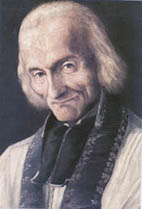
Today is the feast of St. John Marie Vianney, the Cure de Ars
Thursday, August 4, 2011
Monday, July 25, 2011
Quiet Adventures in a Border Town
OLLP has this mission statement on their website:
"Our Lady of Las Palomas is a multi-faith multi-cultural community of contemplation, prayer and action committed to the life of simplicity, presence, and service in right relationship with God. We are a beyond borders interfaith community with people of the United States and Mexico participating in a cooperative community of justice and sustainability"
In fact, OLLP functions as a sort of umbrella organization which encompasses a number of ministries, mostly in Palomas, Mexico rather than in the village of Columbus. Palomas is directly across the border from Columbus, and there is a lot of traffic back and forth. I was discouraged from going across the border during my time there, and followed that advice, and so did not see the ministry there first hand. Palomas is not a safe place right now, for reasons which are obvious if you have been following the progress (or lack thereof) of the Mexican drug wars.
OLLP supports, through classes and donations, the work of The Border Cooperative/ La Cooperativa. The Cooperative works to train women, mostly in Palomas in skills like weaving and jewelry making so that they are able to start their own businesses and attain a degree of independence.
They also support the Hunger Project, a feeding ministry in Palomas.
OLLP itself was also founded to be an interfaith retreat center. I must confess I had some difficulty with this aspect of the ministry, but I am not going to go into it now.
At this point OLLP has relatively little outreach in Columbus itself, although there is sometimes a midweek service, when local Episcopal/Anglican clergy are available for it.
They are at a point of transition in their ministry, because the Rev. Deacon Kris Lethin and his wife, the Rev. Judith Lethin, the real visionaries behind the ministry, are not able to devote all their time to it right now, but divide the year between ministry here in New Mexico, and in their native Alaska.
I was asked to see what was needed in Columbus, to go around talking to people, to see what the needs are in Columbus, and come up with some ideas for how OLLP could accomplish this. I was also asked to consider whether it would be worth the time and resources to try planting
I was initially horrified by this task. First of all, I had only about four and a half days to do this, had little idea what to expect going in, and I am terrible at just starting up conversations with strangers.
What surprised me most about my time there was that I found that God really did send me the people I needed to talk to. I enjoyed the whole process of getting to know the town, and thinking of ways to build community. By the time I left I felt a real affection for the place, and wished I could spend more time there and actually put some of my ideas for building community into action. Columbus is the sort of town that is so small that everybody really does know everybody else, and you can sit at the patio of the one hotel in town and quickly get a good sense of the state of local politics.
Columbus does have spiritual needs, including getting some kind of clergy association established.
It will need to do a lot of healing, I imagine, given the recent arrest of so many officials. Among those arrested were the Chief of the now dissolved police force, and the mayor, so yes, times are tough in Columbus.
I wont go into detail just now about my thoughts on how OLLP should get involved in Columbus, because I have been asked to prepare a report for the Deanery and for the board of OLLP. I have not submitted that yet, and I don't think it would be appropriate to state all my thoughts publicly here, before sharing them with the kind people who sent me to Columbus in the first place.
What I will say is that God gave me a lot to think about in my time there. I found that I was really drawn to idea of ministering in a poor town like Columbus. In addition, I saw proof that if God puts me in a place to do ministry, he will also give me the means to accomplish that ministry. He will send me the people I need to talk to, and give me words to say. I knew this already, but it was deeply encouraging to see it in action. It was, as I said, a draining experience, because it was so new and different, but it was a real blessing to see God's faithfulness in action.
I will also add, that I think that the most effective thing that OLLP could do for Columbus is simply to be a presence there. I think that if OLLP was able to establish some sort of intentional, semi-monastic, community in Columbus, which would just be a model of prayerful, gospel centered community, it would do a great deal of good for the place. More active ministries would, of course, develop from this, but prayer and presence are the place to start.
Monday, July 18, 2011
Further Reflections after Summer Camp
I got back to Las Cruces yesterday, from a long week at Camp Stoney. As I have observed before, I am not a natural summer camper. If you have ever seen the film "Adams Family Values" the camp sequence summarizes my own basic feelings about camp very well.
However, for this week, I tried to put my own grumpy, introverted prejudice against all things Summer camp aside, and judge the camp on its own merits.
Overall, I think the camp is doing a good ministry.
There were certainly things I would do differently if I were setting up the structure of the camp, but I want to share one deeply moving thing that happened at the end of camp.
We were not expecting to be able to have a final Eucharist, but a priest was able to come at the last minute. Before the Eucharist there was an Agape meal. The agape meal was simple, with the kids sitting around tables arranged in the shape of a cross, and a lot of candles scattered about.
The kids were asked to read a lot of verses about love, and one of the counselors explained the meaning of agape love.
We sang some worship songs (I am not a big fan of worship music, but these were all reverent and well known songs) and as the evening went on, it got darker, and finally the only light in the room was the candles.
It was already pretty dark when the kids were asked if they would give any testimonies they might have. It was at this point, that things became heart breaking. One of the first kids to speak up was a little boy, maybe twelve years old who talked about how he had heard God's voice holding him back during a suicide attempt. And many of the kids had similar stories. These were young kids, from difficult backgrounds, and almost all of them had gone through far more suffering in their lives than I have ever had to face. I confess, I was crying by the end of the night.
I was grieved and outraged by the pain these children were going through. I don't want to sound pretentious, but I thought of the Brother's Karamazov and Ivan's anguished discussion with Alyosha, about suffering, and with Ivan I wondered how anything could ever possibly justify or rectify the suffering that these children have in their lives.
And the only response I have is to cling to the cross and to the Eucharist, where the Lord's death is proclaimed until he comes again, where God is with us in the most small and hidden of forms.
And when it came time for the Eucharist, which was very simple, just following the so called "Rite III" in the 1979 Book of Common Prayer, the priest celebrating for us paused to explain that as Episcopalians we believe that Christ is really present in the Eucharist, feeding us. At the fraction, he pauses again to explain that the fraction signifies Christ's broken body, but also our brokenness which is made whole by Christ's. It was the best thing I think he could have said to those kids.
I had the honor of helping distribute communion, and I am deeply grateful for it.
"If anyone eats of this bread, he will live forever. And the bread that I will give for the life of the world is my flesh.” John 6:51
Friday, July 15, 2011
Liturgy and Anglican Catholicism.
I dislike the use of the terms "Catholic" and "Evangelical" to designate parties or forms of Churchmanship. To the extent that one is Christian one is both Evangelical and Catholic. However, I don't have a better set of terms so I will use the accepted terms "Catholic" and "Evangelical" to designate two of the major forms of Churchmanship within Anglicanism.I had an enlightening conversation with a more Low Church friend recently.
We are classmates, both preparing for ordained ministry in the Anglican Communion, and both of us expect to be Church planters. My friend was asking how it could be possible to incorporate all three streams of Anglicanism (Catholic, Evangelical and Charismatic) into a Church plant - especially if such a plant was based on small groups.
Catholic worship generally requires more resources than Evangelical or Charismatic, and so, my friend reasoned, the Anglo-Catholic tradition is less feasible in a small parish or church plant. From some conversations I have had, I think a lot of people also believe that Anglo-Catholic parishes are not accessible to the poor or less educated. I think that the history of the Ritualist movement shows that this is false. After all, the SSC began in the London Docks, where Charles Lowder would preach on the streets and break up drunken brawls. It was as bad as any urban slum today. But I digress.
It dawned on me during this conversation that most Anglicans think that Anglo -Catholicism is fundamentally a matter of Liturgical preference or worship style. But Anglo - Catholicism is not fundamentally about liturgy. It is a theological position not a liturgical preference. My friend was surprised by this, and I realized that I had not articulated the point so clearly before.
A knowledge of the the Oxford Movement makes this obvious though. It is a well known fact (among those who care about such things) that E. B. Pusey celebrated the Eucharist in cassock, surplice and hood to his dying day. Pusey even distanced himself from the SSC because he was not completely sanguine about the ritualism of the Society.
Some of the theological distinctives of the catholic movement as I understand them are:
- The Church is understood to have a historical continuity which is manifested visibly in the ordered life of the Church (Bishops, Priests, Deacons and Laity).
- A belief in the efficacy and importance of the sacraments.
- The Church is primarily a worshiping and Eucharistic community. That is, the Eucharist is the central act of worship, and from this act of worship flows the whole life of the Church. The Eucharist is "source and summit" of the Christian life, to quote Trent (something I don't usually do). This is a somewhat different emphasis from the Evangelical view, which tends to see the Church primarily as entrusted with the task of evangelism. Of course, worship and evangelism are not mutually exclusive.
- The Scripture must be read in the context of the Eucharistic Community of the Church. This is another way of saying that Anglo - Catholics recognize the authority of Tradition.
- Anglicanism is understood as an expression of the one Church. In other words, Anglo - Catholics do believe that we must be catholic first and Anglican second. Anglicanism is a valid expression of the catholic Church to the extent that it is possible to be faithful to the tradition of the universal Church within Anglicanism. Many of us, myself included, think that it is actually easier in some ways to be faithful to true catholic tradition within the Anglican tradition than within the Roman Church.
- Anglo-Catholicism does not necessarily entail a wholesale rejection of the reformation. I for one, think Cranmer's highly Reformed homily on "lively faith" gives excellent expression to the Biblical doctrine of justification.
Now I think that most Anglo-Catholics would agree that some liturgical styles give better expression to catholic theology than do others. I don't know what theology is expressed by clown Eucharists, for example, but it's certainly nothing catholic in any meaningful sense. There is a reason that ritualism grew from the Oxford Movement, but my point is simply that Anglo-Catholicism, if it is anything worth while, is more than a merely aesthetic movement. Rather, it is a theological and pastoral movement, with aesthetic and liturgical implications. I think this is important to remember, especially for those of us like myself, who have some interest in planting churches, or those who are in poorer parishes. We will necessarily have simpler liturgy, but there is no reason why our churches cannot be fully catholic in doctrine.
We have everything we need for catholic worship contained in the historic Anglican liturgies.
Significantly, one of the principles of the Oxford movement was strict loyalty to the BCP. If it comes right down to it, we don't need smells and bells to have fully catholic worship; all we need is the church gathered together in a place, faithfully maintaining apostolic teaching and fellowship, and celebrating the sacraments.
Thursday, July 14, 2011
On Mary and the Church
I have been thinking a lot about Mariology of late - at least since May, when I read a bit by Henri deLubac on Mary and the Church. Until fairly recently I tended to think of Marian devotion as a relatively unimportant part of the Church's life. It has always been important to my personal, private devotional life, but I thought that it really was only a private matter. I am beginning to change my mind.
Even Karl Barth observed that Mariology and Ecclesiology are directly correlated. It is part of catholic tradition to identify Mary with the Church. This is more than just a metaphor. It is true that Mary is only a member of the Church, but a member who stands for the whole in an irreducibly unique way. In some sense, every member of the Church has a unique role, but that is especially apparent in the person of Mary, because only one member is the Mother of God. When Jesus Christ took human flesh, he did not take on human flesh in general, he took flesh "of the virgin Mary his mother," a Jewish woman with a specific address somewhere in Nazareth of Galilee.
Mary's uniqueness is especially important. Marian doctrines are really doctrines about the incarnation. This is well known, and has been repeated many many times by Catholic apologists, but it bears repeating here. For example, Mary is called Mother of God, because otherwise Jesus is not God, and we are not saved.
Now granted, Mary had a unique function, but we may ask: So what? Isn't it the function, or office "Mother of God" which is really important, rather than the individual person Mary? Once Mary's gives birth to Jesus, there is really nothing more to say about her.
This, so far as I can tell, is the attitude of many who reject devotion to the Mary.
But I can think of no attitude more contrary to the meaning of the incarnation. To think that way about the economy of salvation, is to reduce persons to merely functional, interchangeable individuals of a set. Part of what the incarnation proves is that the particular and the individual matters to God. Persons are not ciphers, they cannot be reduced to their functions, and God does not deal in mere generalities -he most certainly does not save generalities - he deals with persons.
If Mary is reducible to a function, then so perhaps is her son. It is not just Jesus' function as atoning sacrifice which is important, it is his identity as the unique Son of God. Or perhaps the best way to put this is that function and person are inseparable. Jesus is an irreducibly unique person, and so is his Mother.
And the unique person Mary of Nazareth stands at the place of continuity between the old and new covenants. She is both Israel, and the Church. She is the first person to accept the coming of the Messiah, responding in faith to the word of God. There was a time when it could be said, quite literally, that Mary was the Church. Before anyone else, Mary accepted God's Word, and was saved by faith in Jesus Christ. She was the faithful remnant of Israel. She had the prophetic work of presenting the Word of God to the world, and she did it more perfectly than any prophet before her. She proclaimed God's word in the Magnificat, but she brought forth the only begotten Son who is the true Word of God.
She walked in faith beside her Son, and though she seems at time to have misunderstood him, she was among those who stayed with him to the last. She shared in his sufferings (I should note I do not mean to imply that Mary's sufferings added something to Christ's, nor do I accept the Roman Catholic doctrine that Mary is Coredemptrix. She shared her son's sufferings in the same way we all must if we also hope to share in his resurrection). In Mary's fruitful virginity we also see the greatest expression of God's work of bringing life from barrenness, a pattern seen in women like Sarah, Hannah and Elizabeth, but most perfectly in Mary. Mary's life, in short, recapitulates the whole life of the Church.
This only makes sense, of course, if you have a sacramental view of reality, in which individual objects become the places where greater spiritual realities are embodied and revealed. Mary stands for the Church in a way which is more than merely metaphorical or symbolic, but which is almost sacramental.
Mary's role as Mother of God places her in a unique relation to the Body of Christ, in every sense of that term. She is the one from whom he takes his humanity - the same humanity which saves us and to which we are united by baptism and Eucharist. If the Church is truly the Body of Christ, then Mary is also mother of the Church.
Of course, in a basic and utterly central way, all Christians are equal in Christ. But the equality we have in Christ does not mean that we do not have distinct roles. I think this is clear from the metaphor of the body which St. Paul uses to such great effect, and I think it is also part of what is going on in John's gospel when Jesus gives his Mother over to the care of the beloved disciple. In the shadow of the cross, Jesus is establishing his Church, and the church takes the form of a new families. And in families, people have different roles. Mary's role is that of mother, and by virtue of our membership in the Church, Mary is our mother, whether we acknowledge it or not.
Marian devotion shapes the way we think of the Church then, because we can look to Mary to understand how the Church should look. First of course, there is Mary's title of Virgin. Mary's virginity, as I already mentioned, seems to me to be the climax of a long drawn out theme in scripture. Sarah, Rachel, Hannah and Elizabeth gave birth from barrenness - God can create life where hope seems lost. But in Mary God's power is shown even more strikingly. In the case of the other women, childbirth was unlikely, but not quite impossible, but in the case of Mary God leaves no doubt that it is his power which brings life from barrenness.
If Mary is the exemplar of the Church, then it is this sort of fruitful virginity which is to characterize the Church's life. This of course, is the same truth which is also revealed in the cross. It is God's power to bring life from death.
If we really believe that Mary has a unique role in the Church, then so do other members of the body. The Church isn't just a democratic society in which every member is identical and interchangeable functionary, it is a family in which each member is unique and irreplaceable. I think this will also incline us towards a catholic view of Church order, in which there are necessarily orders in the Church.
In addition (and I will have to see if I can find precisely where Barth said this) as Barth pointed out, where there is Marian devotion, synergism follows. Mary is the symbol, and the instance of humanity cooperating with God for salvation. Her choice of obedience undoes Eve's choice of disobedience. Meditating on Mary's life, we are likely to come to a synergistic view of salvation.
There is a great deal more to say about Mary and the Church, but I am not going to try and list all of it now. For one thing, we could go through the whole Magnificat, looking at exactly how Mary describes herself; her humility and lowliness are major themes. Also, there is what seems to be her characteristic activity of contemplation, of keeping all the things she sees in the life of her son, and pondering them in her heart. We can ask what it means for the Church to "treasure up all these things and keep them in her heart?" (Luke 2:19, paraphrased).
And of course, it is still worth asking, what form devotion to Mary should take. It is one thing to meditate on the lives of the saints, and another to invoke the saints, asking for their intercession. Perhaps we could restrict our Marian devotion to simply thinking about Mary - not actually speaking to Mary. I doubt this approach is plausible though. If we believe that Mary is our mother, then it would be a very strange family in which the children only thought fondly of their mother, but never spoke to her. This would be odd, because to know another person means more than just knowing about them; it means having a living relationship with them, communicating with them, empathizing with them, and having an interest in them precisely as another person, as a "thou" to be addressed.
If, as I have suggested in this post, it is important for the life of the Church that we be conscious of the Blessed Virgin as a person, that awareness must somehow grounded in a living relationship with her.
Tuesday, July 12, 2011
Summer Camp
Well, this is shaping up to be a somewhat difficult week. I am at Camp Stoney, where the diocese of Rio Grande holds its summer camps. The camp is a good ministry, but I am reminded once again that I don't really do well with Summer camps. I have never enjoyed silly activities, and while I know that they shouldn't, it just makes me uncomfortable to do goofy songs with hand motions (e.g. a blessing, complete with shark fin hand motions, to the Jaws theme music).
Again, I know that everyone is doing it, and it's just for fun, but I still get embarrassed. It's an introvert thing. Camp was not designed for introverts.
Besides which my ritualist tendencies just make me cringe at worship music like "Drop Kick me Jesus." I might enjoy camping if we were doing actual wilderness activities, but that is not really how summer camp works.
One of the serious challenges is that I am not sure exactly what my position here is - I am not a counselor, but I am about the same age as the counselors and I am not clergy. I think my main job is to observe the ministry being done, and learn what I can from it. I know there will be a lot of times in ministry when I don't know exactly what is expected of me, so this too, is a learning experience.
This week they are doing "Grace Camp."
The ministry of Grace Camp is a good one, and I am glad to get to see it. The kids are almost all from difficult backgrounds, many of them with one or both parents currently incarcerated. They are good kids, and I am glad that they have a place where they can come, and just be told about how much Jesus really does love them. To my surprise, I rather like working with the kids.
I am also trying to keep up with my other work, researching Churches, writing the pastoral care manual for St. James and calling people I need to call.
This Thursday, if all goes well, I shall be meeting with the bishop. I am looking forward to getting to talk with Bishop Michael, and I think it will be a good conversation.
My reading list continues to go well and to grow. I have numerous people telling me about books I should be reading, which makes it difficult to keep up. I have finished The Great Gatsby, Slaughterhouse 5 and The Celebrant, a novel about the Martyrs of Memphis. The Martyrs were Anglican Nuns and priests who stayed in Memphis in the late 19th century to treat the sick and dying during one of the cities periodic yellow fever outbreaks. This last novel was particularly moving because the Sisters of St. Mary, now reside in my home diocese of Albany.
I am now reading Philip K. Dick's book Valis. PKD was a fascinating writer, but you can tell that he was beyond mere eccentricity and into insanity by the time he wrote Valis. The book is mostly auto-biographical, and what is fascinating is how self aware he seems to have been about his mental illness. He seems to have know that whatever the nature of his religious experiences (which are at the center of the novel), they were mixed with a heavy dose of mental illness, but he does not seem to have been able to sort out what was insanity and what was something more.
For those of you who don't know much about PKD, here is a link to R. Crumb's comic book bio of him. I am not a big fan of Crumb, but this is an entertaining way to get the background on PKD's stories.
I will be writing some more theologically oriented reflections, occasioned by interesting conversations I have had. But those reflections will take a bit more time to formulate, and for now, my time is limited.
Pax Tibi
Again, I know that everyone is doing it, and it's just for fun, but I still get embarrassed. It's an introvert thing. Camp was not designed for introverts.
Besides which my ritualist tendencies just make me cringe at worship music like "Drop Kick me Jesus." I might enjoy camping if we were doing actual wilderness activities, but that is not really how summer camp works.
One of the serious challenges is that I am not sure exactly what my position here is - I am not a counselor, but I am about the same age as the counselors and I am not clergy. I think my main job is to observe the ministry being done, and learn what I can from it. I know there will be a lot of times in ministry when I don't know exactly what is expected of me, so this too, is a learning experience.
This week they are doing "Grace Camp."
The ministry of Grace Camp is a good one, and I am glad to get to see it. The kids are almost all from difficult backgrounds, many of them with one or both parents currently incarcerated. They are good kids, and I am glad that they have a place where they can come, and just be told about how much Jesus really does love them. To my surprise, I rather like working with the kids.
I am also trying to keep up with my other work, researching Churches, writing the pastoral care manual for St. James and calling people I need to call.
This Thursday, if all goes well, I shall be meeting with the bishop. I am looking forward to getting to talk with Bishop Michael, and I think it will be a good conversation.
My reading list continues to go well and to grow. I have numerous people telling me about books I should be reading, which makes it difficult to keep up. I have finished The Great Gatsby, Slaughterhouse 5 and The Celebrant, a novel about the Martyrs of Memphis. The Martyrs were Anglican Nuns and priests who stayed in Memphis in the late 19th century to treat the sick and dying during one of the cities periodic yellow fever outbreaks. This last novel was particularly moving because the Sisters of St. Mary, now reside in my home diocese of Albany.
I am now reading Philip K. Dick's book Valis. PKD was a fascinating writer, but you can tell that he was beyond mere eccentricity and into insanity by the time he wrote Valis. The book is mostly auto-biographical, and what is fascinating is how self aware he seems to have been about his mental illness. He seems to have know that whatever the nature of his religious experiences (which are at the center of the novel), they were mixed with a heavy dose of mental illness, but he does not seem to have been able to sort out what was insanity and what was something more.
For those of you who don't know much about PKD, here is a link to R. Crumb's comic book bio of him. I am not a big fan of Crumb, but this is an entertaining way to get the background on PKD's stories.
I will be writing some more theologically oriented reflections, occasioned by interesting conversations I have had. But those reflections will take a bit more time to formulate, and for now, my time is limited.
Pax Tibi
Wednesday, July 6, 2011
Trinitarian Reflections after a Zen Encounter (Part 1).
Not too far from my apartment in Las Cruces there is a small Zen temple. It is almost a store front place, but it is well arranged. The abbot is a friendly and pleasant fellow, an American who was taught by a Japanese priest. I have an ongoing interest in Zen, and Buddhism generally, so whenever I find out there is a Zen center near by I go and visit it.
This particular Zen center has a couple of weekly groups that meet for discussion, including an Inter-faith discussion group that meets on Monday nights. The abbot invited me to come to this group, and since I am thoroughly open to interfaith discussions, I accepted. This was about a week ago now. The topic for the evening was Confucianism, and I found that overall the tone of discussion was respectful, the comments intelligent and the conversation productive.
Christianity came up only in passing, but often enough that I could get a sense that everyone there had certain fixed notions about Christianity. Two ideas in particular came up repeatedly. Christianity was contrasted with Buddhism, Confucianism and Taoism, which, it was asserted, do not divide the world into the sacred and the profane. Christianity by contrast divides the world into the sacred and profane, or secular. What is done in Church is sacred and important. God is more present to us at certain times and places, such as in Church at the Eucharist. There is sacred and secular time (for example, the daily office).
Also, Christianity begins with the individual, and is primarily concerned with individual salvation. The starting point for Christians is: how can I as an individual escape the wrath to come? Asian religions generally, and Confucianism in particular, are far more oriented towards the group; family, city, nation, world, etc. The individual’s identity is derived from those around him.
To both of these ideas I want to say, “in a way yes, and in a way no”.
In simplified form, my responses to these critiques of Christianity are as follows.
Christians cannot divide the world simply into sacred and secular. The incarnation means that God is with us, dwelling among us. God becomes present in the everyday realities of human life, in the person of Jesus Christ. This means that there is no aspect of human life so trivial that God does not care about it, and so we as Christians must seek and acknowledge God in every aspect and moment of our lives.
Secondly, Christianity is the only religion I know of in which God is a community. God is Trinity and not a monad. Part of what that means is that individualism is totally excluded. A person alone is no person; if that is true for God how much more so for his creatures.
Now, here is my answer in a more complicated, and possibly less helpful form.
I think that in orthodox Christian theology, there is a dialectal relationship between the sacred and secular, the material and spiritual, the transcendent and immanent.
John Henry Cardinal Newman said that if he had to name the central idea of Christianity, he would say it was the Incarnation, and I think he was correct. The incarnation is an inexhaustibly rich idea, with many implications. Part of what the incarnation means, is that there can be no clear dividing line between the sacred and the secular. God in his transcendence becomes present to us in our finitude. Jesus Christ is both fully God and fully man, and God who dwells in light inaccessible, also dwells among us in the everyday circumstances of human existence.
The same God seated between the Cherubim, who was hidden from access in the Holy of Holies was also held, as a helpless child in the arms of his mother, grew up in a backwater of the Roman Empire, worked in the carpenter’s shop, got tired, hungry, sweaty and had to perform even the most apparently meaningless of necessary tasks like eating, drinking and relieving himself. I am not trying to be crass, but to make the point that even the unpleasant and trivial aspects of human life are sanctified by the incarnation.
If our lives are suffused with a deep awareness of the reality of the incarnation, then we cannot relegate God’s presence to particular times and places. God is present in everything and all circumstances, and we are called to "Rejoice always, pray without ceasing, give thanks in all circumstances" (ESV 1 Thessalonians 5:16-18). Our whole life must become a witness to the presence of God.
Anything less is frankly Gnostic, not Christian. In Gnosticism, there is not only a division but an opposition between the material and spiritual, the sacred and secular. The God of the Gnostics is blissfully unconcerned with the unpleasant realities of material existence. Not so the God of the Bible. I do grant that there are many Christians who are poorly catechized on these maters, and who don't really live in a way that fits the implications of the incarnation. That is a matter of insufficient instruction though, and not a matter of a basic flaw in Christian thought.
Why then do we have "sacred times" and "sacred places"? In Catholic and Orthodox tradition, certain objects (relics) are even understood to bring us closer to the presence of God or the saints. If God is everywhere present and filling all things, how can God be more present at some times and places? I don't have a complete answer, and as I recall St. Augustine addresses this question to some extent in the first book of the Confessions and more or less concludes that it is a mystery, and I doubt I can do better. Still, two thoughts do occur to me. They may be contradictory, or at least in tension. Judge for yourself.
First, designations of sacred time, like the practice of saying Morning and Evening Prayer, or keeping the Sabbath holy, are not intended to limit the presence of God to particular times and places. Quite the opposite. By setting aside certain times to focus on God, I become more aware of God the rest of the time. "Sacred time" is really a way of constantly returning and remembering God's presence. We have special times for doing that, partly as a concession to our weakness as human beings. Unless we have periodic reminders we tend to forget God's presence. So having sacred times does not mean that other times are less sacred, but rather all of time is sanctified by means of constantly returning and remembering God's presence. The same can be said of Sacred places.
Even Buddhists, Confucians and Taoists implicitly concede the need for this sort of constant return and reminder. After all, Buddhists have temples and sacred places, and devote a certain amount of time to meditation each day.
At the same time, while it may seem to contradict what I have just said, I think there is some sense in which God is truly closer to us at certain times and in certain places. For one thing, being material beings means that we live in time and in place. For material beings to be is to be in a given place and time. If God is going to communicate himself to his creation without violating its very nature (i.e. destroying it) he must do so in a particular place and time. Jesus Christ, the ultimate revelation of God, was a particular individual human being, born of a particular woman on a particular day.
Sometimes, people try to make the incarnation into merely an idea. I think Hegel started this trend. On this interpretation, the incarnation merely signifies the unity of the immanent and transcendent. It is not necessary, according to this interpretation, to believe that Jesus Christ, the particular individual, was the unique instance of this union. That, it seems to me is to miss the point. If the Transcendent is to be united to the immanent, the material and the particular, without simply absorbing the material and particular, it must be united at a particular time and place. Otherwise, we are back at Gnosticism and saying that the material does not matter.
And it seems to me that the only way to hold together the particular and the universal, the immanent and transcendent, is through a robustly sacramental theology and spirituality. In the sacraments God is revealed to us in material elements of Bread, wine, water and oil, precisely in their materiality. The bread and wine of the Eucharist are a sign, but they are not merely a sign. God is particularly present to us in these ordinary things, because God was really present in the particular man Jesus Christ, and because God wishes to be present to us as particular persons who are living in a particular place and time.
Now I don't think that means God is absent at other times, but it certainly means that somehow, mysteriously, his presence is first there in the sacraments. Jesus Christ is present everywhere, because he was first present in Nazareth of Galilee. Similarly, all times and places can become sacred, because certain times and places are sacred first. All our meals can become sacred and sacramental acts, but only because of the sacred meal of the Eucharist. Again, this means, that in some way there are truly sacred times and places, which are really more sacred than others, but it does not mean that the rest of time is somehow unimportant. Its importance is derivative and dependent, but not non-existent.
So far, as you may have noticed, my reflections have been more incarnational than the Trinitarian. That is why this post is only part one. Of course, the incarnation and Trinity are closely connected, with the Incarnation leading us into the Trinity. I will try to share some more explicitly Trinitarian reflections in part 2.
Sunday, June 26, 2011
Reflections after a week (plus a sermon!)
After a week in Las Cruces, I think I can say that I like it here. I am situated comfortably in an apartment just across the street from the NMSU campus, with a Starbucks on one corner and an Indian restaurant on the other - joy! I have acquired a library card and a bank account. Since books are slightly more important to me than food, I am quite happy with the library card. And the library is excellent. They have an extraordinarily good collection of videos too, which is nice. Nerd Moment: They have massive amounts of Anime! I am finally working my way through the whole Cowboy Bebop series. As convenient as Starbucks is, I prefer the cafe I am sitting in now, which is about half a mile from my apartment - it would be walking distance if it were under 100 degrees Farenheit. It is called Milagro, they roast their own beans, and the place has the perfect coffeehouse atmosphere. The barista is suitably tattooed and pierced, and I am watching a gentleman sitting out on the patio, painting in mixed media. I must also confess that I am eavesdropping on a conversation about Anarchist political theory (or lack thereof?). I plan on making this comfortable little corner of Bohemia into my second home for the duration of my stay in Las Cruces.
The internship itself is also going well. So far I enjoy working with Fr. Nick and the other staff here. I have been researching the history of the Parish and the area. A major task for me during the internship is learning to assess different parishes. This is going to be of enormous help to me in the course of my career, I am certain. I will be traveling to different parishes, as I have already mentioned, and preparing a sort of report on each. The idea is to figure out what the strengths and weaknesses are at each parish, what areas it needs to grow in, etc. This isn't the sort of thing that gets taught in Seminary, but it is important. I have known a lot of clergy, and not one is without a story of some occasion when they were simply blindsided by some unexpected conflict in a parish. Inevitably, looking back, they describe these disasters as the sort of things which could have been avoided fairly easily if they had just know what signs to look for.
I also had the chance to meet Bishop Michael Vono, the relatively new diocesan. There was a pleasant get together for the deanery clergy, and I was invited - I was also put on the spot and asked to say grace for the dinner. I am told that Bishop Vono is a moderate liberal. He had some comments about the current divisions in the Anglican world, and I found his remarks very gracious. I also found him to be very personable, and he seems to be interested in church planting. I will have the chance to talk with him at greater length later during my internship.
I also preached this morning. I always enjoy preaching, and I think it went well today, although the readings were rather difficult. I have very cranky theological objections to having more than one Eucharist a day in a parish, but two services does give the preacher the chance to improve a bit on the sermon the second time around. I got some very helpful tips from Fr. Nick afterward, and I expect that my preaching will improve greatly by the end of the Summer.
In any case, here is the sermon I preached today.
The readings were Proper 8, year A. (N. B. St. James still uses the BCP lectionary, not the RCL)
Isaiah 2: 10-17, Romans 6: 3-11, Matthew 10: 34-42 and Psalm 89: 1-4, 15-18.
The Peaceful Sword of Christ.
Last week, I had the adventure of driving across the country from New York to Las Cruces. Most of you have probably been on at least one long road trip in your life and you know that on road trips you see lot of interesting billboards. I saw billboards for the Jesse James wax museum, billboards for Churches, and at least one that just said Jesus in really big capital letters.
But the most interesting billboards I saw were in Missouri along the I-44. There must have been at least twenty billboards for the Precious Moments Chapel. You all know the precious moments figures? they’re the little figurines with the big eyes, sort of child like, designed to make you feel warm and comfortable and sentimental. There’s a whole industry around them. Figurines, greeting cards, posters, you name it. And, apparently, somewhere just east of Joplin Missouri, there’s a whole chapel with Precious Moments figurines portraying scenes from the Old and New Testament.
I found myself wondering, as I saw billboard after billboard advertising the precious moments chapel, how they would portray some of the biblical stories. Because, as I’m sure you have noticed, there are some of the stories of the Bible that are anything but cosy or comforting. For example, I doubt that any of the readings for this Sunday made it into the Precious Moments Chapel. In the Gospel reading, Jesus goes out of his way to avoid being comforting or cosy.
It is as if Jesus knew perfectly well that people were expecting him to be comforting, easy going - a cuddly messiah - and he wanted as quickly and decisively as possible to disabuse them of that notion. “Do not think that I came to bring peace on Earth” he tells his disciples “I did not come to bring peace but a sword.” If Jesus had a press secretary - which fortunately he didn’t - he would have pulled Jesus aside at this point and asked him “What are you thinking, Lord? you’re supposed to be the prince of peace! People want nice pastel pictures of you looking meek, and mild, and comforting, maybe holding a lamb - and definitely not holding a sword.”
Now Jesus’ disciples had every reason to expect that Jesus had come precisely to bring peace. When he was born the Angels declared peace on Earth good will towards men; The prophet Isaiah had said that Jesus would be called “Prince of Peace” (Isa. 9:6), and St. Paul, in the letter to the Ephesians, refers to the message of Christ as the gospel of peace. It seems like Peace, is very much something Jesus came to bring.
How can the gospel of Peace bring division that “sets a man against his father” and “a daughter against her mother”? Jesus did come to bring peace, but it was not the kind of peace that his disciples, or anyone else expected. There are at least two kinds of peace to be had. The World’s peace, and God’s peace.
The world makes us a lot of offers of peace. It offers us the false peace of not being challenged, or pushed beyond where we are comfortable. Some people wanted Jesus to bring that kind of peace - they wanted Jesus to just be just the meek and mild saviour, who didn’t really ask much of them, who made them feel warm and comfortable all the time. They wanted the peace of not being bothered. Or some people wanted a more expansive peace, a political peace. Jesus and his disciples lived under the rule of the Roman empire, and Rome prided itself keeping the peace. Rome could keep peace in its empire, but it was a peace that was always backed up by violence. Rome had the biggest military force in the world and no qualms about using it. People would behave themselves for Rome because they knew that if they got out of line Rome would destroy them.
Rome stands as a good example of this World’s kind of peace; a peace maintained by violence and by fear. Many many people in Israel wanted Jesus to bring this kind of peace. They expected the Messiah to establish Israel as the center of an earthly empire where God would reign. They imagined the same kind of peace which Rome offered, just with Israel holding all the power.
That is the kind of peace which Jesus most emphatically did not come to bring. He brought a different kind of peace from anything that the world knew or expected. Rome ruled by the sword, and Jesus said he came to bring a sword, but his sword was very different from Rome’s.
If you look on the cover of your bulletins there’s an icon (See above). I don’t know how much you may know about icons, but they usually show some event from the life of Christ or the lives of the saints. I love Icons, because they don’t just show how an event would have looked if you saw it in person; instead they use symbols to show something about what that event means. I think this Icon shows what kind of sword Jesus came to bring.
This Icon is the Resurrection. Jesus is bursting from the tomb, victorious, and powerful, and in his hand he’s holding his cross like a weapon - like a sword, in fact. Obviously, Jesus didn’t really come out of the tomb carrying his cross. The point the icon makes is that the Cross was the weapon that Christ used to overcome the world, the flesh and the devil. The cross was the sword by which Christ brought God’s peace.
This gives us a clue as to how different God’s peace is from the World’s. Rome also used the cross as a weapon to keep peace, by putting those people who disturbed the peace onto a cross. Jesus used the cross as weapon by being the crucified one. Unlike the World, Jesus doesn’t keep the peace by overpowering his opponents, but by suffering at their hands and for their sakes.
Jesus’ victory and his peace don’t come through violence - but the sword of the cross still divides people. St. Paul asks us “Do you not know that as many of us as were baptized into Christ were baptized into his death? Therefore we were buried with him through baptism into death.” And this is the most fundamental division that there can be between people. We’ve either died with Christ or we havn’t.
St. Paul continues by telling us to consider ourselves “dead to sin, but alive to God in Jesus Christ.” To be dead to sin means we aren’t defined by any of the things of the World. Not by our age, race, intelligence, wealth, family or any of things the World normally uses to say who a person is. Maybe most importantly, we are no longer defined by our sins and our failures. Those things are as meaningless to a baptized person as they are to a dead person. To live to God means that we are defined only by our relationship to the Father through Jesus Christ. In Jesus we have peace with God. And it isn’t like the World’s peace, because God’s peace is not a peace kept by force or threats of violence, but by the selfless love of Christ on the cross.
If we live our lives as if we really believed this, trying to take up our crosses daily and lead Christ like lives, we will find that we encounter conflict. Because living in light of Christ’s death and Resurrection is a threat to the World’s kind of peace. Effectively, we say that the world has no hold on us. The world will try to convince us that we are wrong, that it still has some claim on us. One tactic the world uses is to tell us there is something called an “ordinary person.”
The world tells us we are just ordinary people. The people sitting next to us in Church are just ordinary people. All of us still have to go to work, still get tired, sick and old. We aren’t special to God, and we are still just caught up in the same hectic mess of the world that we knew before we ever met Jesus. Really, the world says, nothing has changed. And this is a very convincing lie. Because we do still look like ordinary people, even to ourselves.
Even though we have new life in Christ, that life is hidden until Christ’s return when we will be changed in a way that the whole world can see. It takes faith to see as defined by our relationship to God, who we can’t see, and not by the daily pressures of the world. It takes faith to realize that in God’s eyes there is no such thing as an ordinary person. C. S. Lewis said once “the dullest and most uninteresting person you talk to may one day be a creature which, if you saw it now, you would be strongly tempted to worship. . . you have never met a mere mortal.” The only way to look at things this way is by constantly reminding ourselves of how God sees us, through prayer, worship and reading the bible.
When we look at ourselves and others in this way, with the eyes of faith, we have the real peace that Jesus came to bring. And when we look at other people in faith, trying to see them the way God does, that peace we have from God spills over into our relationships with other people - even people who look impossible to get along with by worldly standards.
This kind of peace is very different from the world’s peace. It is a peace based on love, not force; it is a peace that we can have even when the whole world is falling apart around us and is anything but peaceful, because it doesn’t come from the world. It is a peace so different from the worlds, that in the blessing at the end of our Sunday services it is called the peace that passes all understanding. The world can’t understand this kind of peace, but faith can grasp it. When those around us see a kind of peace in us that they can’t explain, it is one the most powerful witnesses we can give to the truth of the Gospel, because it shows that there is something God can give that the world can’t give or take away.
When we leave Church today, may we walk out into the world, armed with the sword of the cross, and may the peace of God become visible in all our lives as our proof that Christ has overcome the world.
Amen.
The internship itself is also going well. So far I enjoy working with Fr. Nick and the other staff here. I have been researching the history of the Parish and the area. A major task for me during the internship is learning to assess different parishes. This is going to be of enormous help to me in the course of my career, I am certain. I will be traveling to different parishes, as I have already mentioned, and preparing a sort of report on each. The idea is to figure out what the strengths and weaknesses are at each parish, what areas it needs to grow in, etc. This isn't the sort of thing that gets taught in Seminary, but it is important. I have known a lot of clergy, and not one is without a story of some occasion when they were simply blindsided by some unexpected conflict in a parish. Inevitably, looking back, they describe these disasters as the sort of things which could have been avoided fairly easily if they had just know what signs to look for.
I also had the chance to meet Bishop Michael Vono, the relatively new diocesan. There was a pleasant get together for the deanery clergy, and I was invited - I was also put on the spot and asked to say grace for the dinner. I am told that Bishop Vono is a moderate liberal. He had some comments about the current divisions in the Anglican world, and I found his remarks very gracious. I also found him to be very personable, and he seems to be interested in church planting. I will have the chance to talk with him at greater length later during my internship.
I also preached this morning. I always enjoy preaching, and I think it went well today, although the readings were rather difficult. I have very cranky theological objections to having more than one Eucharist a day in a parish, but two services does give the preacher the chance to improve a bit on the sermon the second time around. I got some very helpful tips from Fr. Nick afterward, and I expect that my preaching will improve greatly by the end of the Summer.
In any case, here is the sermon I preached today.
The readings were Proper 8, year A. (N. B. St. James still uses the BCP lectionary, not the RCL)
Isaiah 2: 10-17, Romans 6: 3-11, Matthew 10: 34-42 and Psalm 89: 1-4, 15-18.
The Peaceful Sword of Christ.
Last week, I had the adventure of driving across the country from New York to Las Cruces. Most of you have probably been on at least one long road trip in your life and you know that on road trips you see lot of interesting billboards. I saw billboards for the Jesse James wax museum, billboards for Churches, and at least one that just said Jesus in really big capital letters.But the most interesting billboards I saw were in Missouri along the I-44. There must have been at least twenty billboards for the Precious Moments Chapel. You all know the precious moments figures? they’re the little figurines with the big eyes, sort of child like, designed to make you feel warm and comfortable and sentimental. There’s a whole industry around them. Figurines, greeting cards, posters, you name it. And, apparently, somewhere just east of Joplin Missouri, there’s a whole chapel with Precious Moments figurines portraying scenes from the Old and New Testament.
I found myself wondering, as I saw billboard after billboard advertising the precious moments chapel, how they would portray some of the biblical stories. Because, as I’m sure you have noticed, there are some of the stories of the Bible that are anything but cosy or comforting. For example, I doubt that any of the readings for this Sunday made it into the Precious Moments Chapel. In the Gospel reading, Jesus goes out of his way to avoid being comforting or cosy.
It is as if Jesus knew perfectly well that people were expecting him to be comforting, easy going - a cuddly messiah - and he wanted as quickly and decisively as possible to disabuse them of that notion. “Do not think that I came to bring peace on Earth” he tells his disciples “I did not come to bring peace but a sword.” If Jesus had a press secretary - which fortunately he didn’t - he would have pulled Jesus aside at this point and asked him “What are you thinking, Lord? you’re supposed to be the prince of peace! People want nice pastel pictures of you looking meek, and mild, and comforting, maybe holding a lamb - and definitely not holding a sword.”
Now Jesus’ disciples had every reason to expect that Jesus had come precisely to bring peace. When he was born the Angels declared peace on Earth good will towards men; The prophet Isaiah had said that Jesus would be called “Prince of Peace” (Isa. 9:6), and St. Paul, in the letter to the Ephesians, refers to the message of Christ as the gospel of peace. It seems like Peace, is very much something Jesus came to bring.
How can the gospel of Peace bring division that “sets a man against his father” and “a daughter against her mother”? Jesus did come to bring peace, but it was not the kind of peace that his disciples, or anyone else expected. There are at least two kinds of peace to be had. The World’s peace, and God’s peace.
The world makes us a lot of offers of peace. It offers us the false peace of not being challenged, or pushed beyond where we are comfortable. Some people wanted Jesus to bring that kind of peace - they wanted Jesus to just be just the meek and mild saviour, who didn’t really ask much of them, who made them feel warm and comfortable all the time. They wanted the peace of not being bothered. Or some people wanted a more expansive peace, a political peace. Jesus and his disciples lived under the rule of the Roman empire, and Rome prided itself keeping the peace. Rome could keep peace in its empire, but it was a peace that was always backed up by violence. Rome had the biggest military force in the world and no qualms about using it. People would behave themselves for Rome because they knew that if they got out of line Rome would destroy them.
Rome stands as a good example of this World’s kind of peace; a peace maintained by violence and by fear. Many many people in Israel wanted Jesus to bring this kind of peace. They expected the Messiah to establish Israel as the center of an earthly empire where God would reign. They imagined the same kind of peace which Rome offered, just with Israel holding all the power.
That is the kind of peace which Jesus most emphatically did not come to bring. He brought a different kind of peace from anything that the world knew or expected. Rome ruled by the sword, and Jesus said he came to bring a sword, but his sword was very different from Rome’s.
If you look on the cover of your bulletins there’s an icon (See above). I don’t know how much you may know about icons, but they usually show some event from the life of Christ or the lives of the saints. I love Icons, because they don’t just show how an event would have looked if you saw it in person; instead they use symbols to show something about what that event means. I think this Icon shows what kind of sword Jesus came to bring.
This Icon is the Resurrection. Jesus is bursting from the tomb, victorious, and powerful, and in his hand he’s holding his cross like a weapon - like a sword, in fact. Obviously, Jesus didn’t really come out of the tomb carrying his cross. The point the icon makes is that the Cross was the weapon that Christ used to overcome the world, the flesh and the devil. The cross was the sword by which Christ brought God’s peace.
This gives us a clue as to how different God’s peace is from the World’s. Rome also used the cross as a weapon to keep peace, by putting those people who disturbed the peace onto a cross. Jesus used the cross as weapon by being the crucified one. Unlike the World, Jesus doesn’t keep the peace by overpowering his opponents, but by suffering at their hands and for their sakes.
Jesus’ victory and his peace don’t come through violence - but the sword of the cross still divides people. St. Paul asks us “Do you not know that as many of us as were baptized into Christ were baptized into his death? Therefore we were buried with him through baptism into death.” And this is the most fundamental division that there can be between people. We’ve either died with Christ or we havn’t.
St. Paul continues by telling us to consider ourselves “dead to sin, but alive to God in Jesus Christ.” To be dead to sin means we aren’t defined by any of the things of the World. Not by our age, race, intelligence, wealth, family or any of things the World normally uses to say who a person is. Maybe most importantly, we are no longer defined by our sins and our failures. Those things are as meaningless to a baptized person as they are to a dead person. To live to God means that we are defined only by our relationship to the Father through Jesus Christ. In Jesus we have peace with God. And it isn’t like the World’s peace, because God’s peace is not a peace kept by force or threats of violence, but by the selfless love of Christ on the cross.
If we live our lives as if we really believed this, trying to take up our crosses daily and lead Christ like lives, we will find that we encounter conflict. Because living in light of Christ’s death and Resurrection is a threat to the World’s kind of peace. Effectively, we say that the world has no hold on us. The world will try to convince us that we are wrong, that it still has some claim on us. One tactic the world uses is to tell us there is something called an “ordinary person.”
The world tells us we are just ordinary people. The people sitting next to us in Church are just ordinary people. All of us still have to go to work, still get tired, sick and old. We aren’t special to God, and we are still just caught up in the same hectic mess of the world that we knew before we ever met Jesus. Really, the world says, nothing has changed. And this is a very convincing lie. Because we do still look like ordinary people, even to ourselves.
Even though we have new life in Christ, that life is hidden until Christ’s return when we will be changed in a way that the whole world can see. It takes faith to see as defined by our relationship to God, who we can’t see, and not by the daily pressures of the world. It takes faith to realize that in God’s eyes there is no such thing as an ordinary person. C. S. Lewis said once “the dullest and most uninteresting person you talk to may one day be a creature which, if you saw it now, you would be strongly tempted to worship. . . you have never met a mere mortal.” The only way to look at things this way is by constantly reminding ourselves of how God sees us, through prayer, worship and reading the bible.
When we look at ourselves and others in this way, with the eyes of faith, we have the real peace that Jesus came to bring. And when we look at other people in faith, trying to see them the way God does, that peace we have from God spills over into our relationships with other people - even people who look impossible to get along with by worldly standards.
This kind of peace is very different from the world’s peace. It is a peace based on love, not force; it is a peace that we can have even when the whole world is falling apart around us and is anything but peaceful, because it doesn’t come from the world. It is a peace so different from the worlds, that in the blessing at the end of our Sunday services it is called the peace that passes all understanding. The world can’t understand this kind of peace, but faith can grasp it. When those around us see a kind of peace in us that they can’t explain, it is one the most powerful witnesses we can give to the truth of the Gospel, because it shows that there is something God can give that the world can’t give or take away.
When we leave Church today, may we walk out into the world, armed with the sword of the cross, and may the peace of God become visible in all our lives as our proof that Christ has overcome the world.
Amen.
Sunday, June 19, 2011
Now in New Mexico
Well, I made it to New Mexico in one piece. I got to Amarillo, TX on Friday and stopped for lunch. My goal for Friday was to make it to Albuquerque, and since Amarillo was only three hours from Albuquerque, I decided to dawdle a little bit. I wandered into a store that claimed to be "Texas' Catholic Superstore!" where the proprietor evangelized me.
He also asked me if I had ever read Thomas Aquinas. I have to admit, I found this a bit funny. I was even wearing my Aquinas medal at the time. I just said yes, I have read a little Aquinas, and he is one of my favorites.
I found a number of things I wanted in the store - mostly statues and pictures, and a couple of books - but I resisted the temptation to buy anything, and pressed on to Albuquerque, where I spent the night.
I arrived in Las Cruces yesterday (I can't believe it was only yesterday!) around one in the afternoon, and I was greeted by Fr. Nick and his wife from the church. We had lunch at a Boba shop located a couple of blocks away from my new apartment, which is also next door to a Starbucks, where I am sitting right now, giving you an update.
I had time for a quick nap before I went off to the Juvenal detention facility with a team from the Church. They go once a month and just hang out with the guys in one dorm area, and spend a little time in prayer. One member of our team gave a brief talk on the presence of God in our lives, and how we can experience that presence. I was impressed, as I have been in the past when I participated in prison ministry, by the amount of faith which some of these guys have, and I am looking forward to going back.
This morning I attended both services at St. James, and met the congregation. They were all very welcoming, and I am looking forward to getting to know the parish better. In the mean time I am taking a break, and trying to catch up on email and various other tasks. Tomorrow I have the day off, so I will be taking the day to explore Las Cruces. It looks like a beautiful town, and I think I will enjoy my summer here.
Pax Tibi, Per Crucem.
He also asked me if I had ever read Thomas Aquinas. I have to admit, I found this a bit funny. I was even wearing my Aquinas medal at the time. I just said yes, I have read a little Aquinas, and he is one of my favorites.
I found a number of things I wanted in the store - mostly statues and pictures, and a couple of books - but I resisted the temptation to buy anything, and pressed on to Albuquerque, where I spent the night.
I arrived in Las Cruces yesterday (I can't believe it was only yesterday!) around one in the afternoon, and I was greeted by Fr. Nick and his wife from the church. We had lunch at a Boba shop located a couple of blocks away from my new apartment, which is also next door to a Starbucks, where I am sitting right now, giving you an update.
I had time for a quick nap before I went off to the Juvenal detention facility with a team from the Church. They go once a month and just hang out with the guys in one dorm area, and spend a little time in prayer. One member of our team gave a brief talk on the presence of God in our lives, and how we can experience that presence. I was impressed, as I have been in the past when I participated in prison ministry, by the amount of faith which some of these guys have, and I am looking forward to going back.
This morning I attended both services at St. James, and met the congregation. They were all very welcoming, and I am looking forward to getting to know the parish better. In the mean time I am taking a break, and trying to catch up on email and various other tasks. Tomorrow I have the day off, so I will be taking the day to explore Las Cruces. It looks like a beautiful town, and I think I will enjoy my summer here.
Pax Tibi, Per Crucem.
Friday, June 17, 2011
On the Road.
I am sitting in a Starbucks in Amarillo, TX taking advantage of their free internet and reliably tasty coffee. This is the fourth day of my long road trip to New Mexico.
It has been a long exhausting drive hopping from one westbound highway to another, staring at billboards that advertise by turns Baptist Churches, "Adult" superstores, Long defunct tourist attractions, or simply read JESUS. I wonder: how many people really respond to evangelistic billboards like that?
I also saw many, many signs for the Precious Moments Chapel, which can be found somewhere outside of Joplin, MO. According to the signs, there are many scenes from the Old and New Testaments there, enacted by the neotenic Precious Moments characters. I almost wanted to stop just to see how they would handle the story of the Levite's concubine.
I have never done a trip like this on my own before and it has been a long time since I really did anything comparable with my family. The truth is though, I enjoy driving and I enjoy watching the landscape of the country change. Somewhere in western MO was the most dramatic change - the soil abruptly changed to a reddish color, which became deeper as I went through OK. Oklahoma had the distinction of having the friendliest toll road workers I have ever run into - they were positively chatty compared with the typically depressed, dreary workers I am accustomed to meeting in such jobs. Personally, I think any job in which I was stuck in a small box where I got to inhale car fumes for eight hours a day while wearing a painfully orange vest would make me a bit cranky, so I am impressed with the Oklahomins.
The weather has been mostly good. The most distressing thing was the winds in OK, which were pretty strong, but the sky was clear with no sign of tornadoes, which was my major concern.
I did pass through Joplin Missouri though, and saw the very edge of the devastation there. I was plainly far from the worst of it, and passing by at 7o mph, but I could see the ruins of a few houses through the broken line of trees. Bits of the destroyed homes were hung in the branches of the trees that were still standing. I said a number of prayers as I drove through that area.
Now I am in Texas, as I mentioned. I lived here a number of years ago, although I was in the Dallas area. I don't think I have set foot in Texas for a good fifteen years, and it is kind of nice to see it for a bit. I did not enjoy living here as I recall, but it is not a bad state to drive in. The roads in this area are not bad, and there is not nearly as much construction as there was in some other states.
I expect to be in New Mexico this evening and at my summer apartment in Las Cruces by early afternoon tomorrow. On the road, I am listening to Eugene Peterson's book Christ Plays in Ten Thousand Places and enjoying it enormously (Technically, this violates my no theology rule, but I it was the only audio book I had on my iPod). Peterson is an excellent spiritual writer, and actually quite good on the Eucharist. Despite advice I have received to listen to music on long trips, rather than audio books, I find that spoken words keep me awake a little better. In the evenings, when I stop for the night, I am reading The Great Gatsby. I have never read it before, which I realize is a big gap in my claims to literacy, so I am filling it in now. I have finished the Moviegoer, by Walker Percy, as well as Eye in the Sky by Philip K. Dick. I found Eye in the Sky entertaining, but I was not really grabbed by it. I think it was one of Dick's earlier novels before he went completely insane, but also before he really started dealing with some of the themes of identity and perception that his books are best known for.
As sad thing happened yesterday, and I heard from my parents that they had to put one of the family cats, Boots, to sleep. He was about fourteen years old - older than my youngest sibling. He had kidney failure, and was not able to eat or even drink anymore. I was fond of him, and miss him but it was especially hard on my siblings, most of whom have never gone through having a pet die. He was really my younger sister's cat, and it was especially hard for her. It was also the first time that a family pet has needed to be put to sleep, which I know was a hard decision for the family to make; they are all in my prayers. Personally, I am a big pet person, and I hope to see them in heaven.
Well, its about time to get back on the road. Next time I post, it will probably be from Las Cruces, God willing.
It has been a long exhausting drive hopping from one westbound highway to another, staring at billboards that advertise by turns Baptist Churches, "Adult" superstores, Long defunct tourist attractions, or simply read JESUS. I wonder: how many people really respond to evangelistic billboards like that?
I also saw many, many signs for the Precious Moments Chapel, which can be found somewhere outside of Joplin, MO. According to the signs, there are many scenes from the Old and New Testaments there, enacted by the neotenic Precious Moments characters. I almost wanted to stop just to see how they would handle the story of the Levite's concubine.
I have never done a trip like this on my own before and it has been a long time since I really did anything comparable with my family. The truth is though, I enjoy driving and I enjoy watching the landscape of the country change. Somewhere in western MO was the most dramatic change - the soil abruptly changed to a reddish color, which became deeper as I went through OK. Oklahoma had the distinction of having the friendliest toll road workers I have ever run into - they were positively chatty compared with the typically depressed, dreary workers I am accustomed to meeting in such jobs. Personally, I think any job in which I was stuck in a small box where I got to inhale car fumes for eight hours a day while wearing a painfully orange vest would make me a bit cranky, so I am impressed with the Oklahomins.
The weather has been mostly good. The most distressing thing was the winds in OK, which were pretty strong, but the sky was clear with no sign of tornadoes, which was my major concern.
I did pass through Joplin Missouri though, and saw the very edge of the devastation there. I was plainly far from the worst of it, and passing by at 7o mph, but I could see the ruins of a few houses through the broken line of trees. Bits of the destroyed homes were hung in the branches of the trees that were still standing. I said a number of prayers as I drove through that area.
Now I am in Texas, as I mentioned. I lived here a number of years ago, although I was in the Dallas area. I don't think I have set foot in Texas for a good fifteen years, and it is kind of nice to see it for a bit. I did not enjoy living here as I recall, but it is not a bad state to drive in. The roads in this area are not bad, and there is not nearly as much construction as there was in some other states.
I expect to be in New Mexico this evening and at my summer apartment in Las Cruces by early afternoon tomorrow. On the road, I am listening to Eugene Peterson's book Christ Plays in Ten Thousand Places and enjoying it enormously (Technically, this violates my no theology rule, but I it was the only audio book I had on my iPod). Peterson is an excellent spiritual writer, and actually quite good on the Eucharist. Despite advice I have received to listen to music on long trips, rather than audio books, I find that spoken words keep me awake a little better. In the evenings, when I stop for the night, I am reading The Great Gatsby. I have never read it before, which I realize is a big gap in my claims to literacy, so I am filling it in now. I have finished the Moviegoer, by Walker Percy, as well as Eye in the Sky by Philip K. Dick. I found Eye in the Sky entertaining, but I was not really grabbed by it. I think it was one of Dick's earlier novels before he went completely insane, but also before he really started dealing with some of the themes of identity and perception that his books are best known for.
As sad thing happened yesterday, and I heard from my parents that they had to put one of the family cats, Boots, to sleep. He was about fourteen years old - older than my youngest sibling. He had kidney failure, and was not able to eat or even drink anymore. I was fond of him, and miss him but it was especially hard on my siblings, most of whom have never gone through having a pet die. He was really my younger sister's cat, and it was especially hard for her. It was also the first time that a family pet has needed to be put to sleep, which I know was a hard decision for the family to make; they are all in my prayers. Personally, I am a big pet person, and I hope to see them in heaven.
Well, its about time to get back on the road. Next time I post, it will probably be from Las Cruces, God willing.
Subscribe to:
Posts (Atom)